Gave a talk today at @fwwsoc.bsky.social on "Democracy without Order: Reimagining Authority in the Russian Army, 1917"
It's always refreshing to dive back into a subject I haven't worked on for some time!
Posts by Konstantin Tarasov
For PhD/ECR members of @fwwsoc.bsky.social - the Society has a call for papers out for 'New Voices in First World War Studies' - a virtual conference planned for June.
It's a great opportunity for members to showcase their amazing new research. See here for more:
drive.google.com/file/d/12DLx... 🗃️
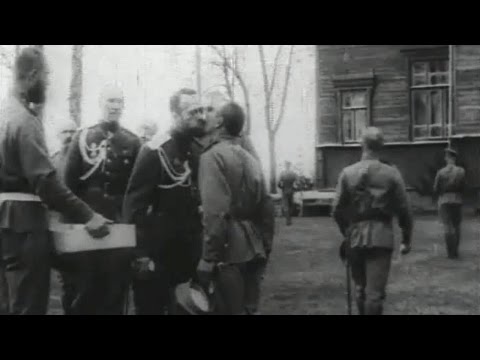
Going by Nicholas II’s diaries, the Easter triple-kiss ritual could feel like an assembly line. On 7 April 1914 he greeted 920 people in one hour, about 3.9 sec each. Based on typical yearly totals, the average pace was 6–8 sec per person
www.youtube.com/watch?v=15o0...
Discussions about changing of the field continue at @basees.bsky.social
Now, about teaching approaches
Few pictures of the beautiful campus of @unibirmingham.bsky.social
@basees.bsky.social
The Nobel Prize-winning historical and educational society Memorial, which preserves the memory of Soviet repressions, has been recognised as an extremist organisation in Russia. Currently, the websites of its branches with lists of victims are not working
A picture of the devastated city of Napier in the wake of the 1931 Hawke's Bay earthquake.
🚨 CFP: Disastrous Pasts And Sustainable Futures. Urban disasters and resilience in historical and social scientific perspectives.
🗓️ 29-30 June 2026
An interdisciplinary and international conference organised at the University of Warwick
For more details, see warwick.ac.uk/fac/arts/his...
🗃️
I'm looking for two postdocs/research fellows (2.5 years, 100%) to join the #ERC project EMPSOLID.
Preference for candidates with expertise on the Caucasus and/or Central Asia🌏, but applications focusing on other regions of the Romanov Empire are also encouraged.
My review of Dreams of Emancipation, edited by Norihiro Naganawa, is now available on @hsozkult.bsky.social
If come to London, you can't just attend only one event
Sven Beckert and Alessandro Staziani are presenting their books on capitalism at @lsehy.bsky.social
@ukri.org brought together Marie Curie and ERC fellows at the Royal Society. There were very few humanities and social science researchers, but many young scientists with compelling research that promises to change the world. Wonderful to listen about it
The official Russian newspaper "Kommersant" publishes a surprisingly honest interview with Vladislav Kononov about the new Russian school textbooks. It states bluntly that their purpose is to convey the state's point of view.
www.kommersant.ru/doc/8531359?...
According to Polivanov, not criminals but revolutionary sailors spread this slang. They were rooted in port life, close to the lumpen proletariat, and highly mobile during the Civil War. And their revolutionary vanguard status made their speech prestigious and worth imitating
Polivanov argued these words originated in Odesa. As a major international port city, Odesa created unique conditions for mixing languages and jargons, especially through contact among lower social classes. Elsewhere such borrowings stayed local, but Odesa slang spread widely.
In the late 1920s, linguist Yevgeny Polivanov began wondering how criminal slang made its way into student speech. He noted the foreign origins of words like “fraer” (from Yiddish freier), “shket” (from English scout), and “shoposhnik” (from English shop), among others.
Composite image of bulletins produced during the 1926 General Strike. They include copies of the British Worker, British Gazette, Daily Mail, Daily Mirror, Evening News, Sunday Pictorial and a selection of emergency bulletins, including sheets produced by local strike committees and Councils of Action.
Reporting the General Strike
We're looking ahead to May! As the centenary of Britain's 'Great Hold-Up' approaches, we've added more sources to our General Strike digitised collection
550+ strike bulletins, leaflets, reports, radio transcripts and more at warwick.ac.uk/services/lib...
Here’s a small but useful resource on how Soviet party leadership evolved from Lenin to Gorbachev. It clearly shows how the Central Committee and Politburo were gradually reshaped through purges, generational change, and leadership turnover. sovietleadershipdata.pages.dev
I’m starting to enjoy receiving books from publishers
Today a package from the US reached me
It's a shame, of course, that I got to the @britishlibrary.bsky.social only now
Nice to see two densely packed reading rooms of Humanities
That is true. That was a kind of window to USSR to the same degree as the Harvard Project.
And now we are in the same situation with an access to Russian archives. Sad irony.
The archive of the Smolensk Communist Party Committee for 1917–1941 is now fully digitised and online.
The unique documents were taken by the Germans during WWII and eventually ended up in the US. Now anyone can access them.
catalog.archives.gov/id/12004746
This is what books in Russia look like now if they mention drugs - sealed in plastic with large warning labels.
Soon every book may look like a cigarette pack:
“Reading causes addiction. Reading leads to uncontrolled brain development. Reading seriously harms ignorance.”
NEW BOOK
Helena Pilke, Sanomalehtien sisällissota
How the Finnish Civil War press demonised political opponents, spread misinformation, and gradually replaced factual reporting with propaganda until words started turning into actions.
I wish I could read Finnish!!!
vastapaino.fi/sivu/tuote/s...
Talking to PhD students today about my research. Always happy to discuss my work (particularly when coffee and biscuits are involved)
@uniofnottingham.bsky.social
If you are in St Andrews on 9 March, please come along to ‘Framing the First World War’ book launch. Aimée, Dave and Mike have done a terrific job with the book that explores how combatants framed the conflict as it unfolded. I will also present on my contribution on Russo-French military learning.
Ukraine imposed sanctions against the Russian Military Historical Society and a number of Russian historians, including Oleg Airapetov, Ruslan Gagkuev, Alexey Miller, Pyotr Multatuli, Kirill Nazarenko, and Alexander Chubaryan