Advertisement ยท 728 ร— 90

Posts by Trond Oskars

๐—š๐—ฒ๐—ป๐—ฒ๐˜๐—ถ๐—ฐ๐˜€ ๐—ถ๐—ป ๐˜๐—ต๐—ฒ ๐—ข๐—ฐ๐—ฒ๐—ฎ๐—ปโ€™๐˜€ ๐—ง๐˜„๐—ถ๐—น๐—ถ๐—ด๐—ต๐˜ ๐—ญ๐—ผ๐—ป๐—ฒ
The silvery lightfish is one of the most abundant species inhabiting the North Atlantic mesopelagic layer. Despite its ecological importance there is insufficient knowledge about its population genetic structure.

3 weeks ago 4 1 1 0

Maybe not in our lifetime, but it seems like they might be heading toward becoming separate species? For future taxonomists :)
๐Ÿงช ๐Ÿ™๐Ÿฆ‘๐ŸŒ

3 weeks ago 0 1 0 0

But it shows you how social media as part of your research strategy, and I am certain this will be an essential work desk book for scientists and researchers to begin outreach on social media.

(And I am not just saying that because I am interviewed in the book or because I got a signed copy!)

1 month ago 1 0 0 0

I have just received Social Media for Research Impact by Marcel Bogers and Mike Young, and I wish something like this had existed earlier in my career.

This is not a book about chasing likes or becoming famous.

(Although, that would be a nice side effect!)

1 month ago 0 0 1 0

Very few of us learn how to communicate in public spaces, and certainly not on social media.

However, the latter is increasingly the place to be to communicate our research.

Most of us just figure it out as we go.

Now there is an alternative.

I

1 month ago 0 0 1 0
Post image Post image

Scientists are increasingly told to be visible.

But how do we reach the right audience?

Our colleagues in the field know about the work from papers and reports, but how do we reach the community to let the results have real world impact?

๐ŸŒ ๐Ÿงช ๐Ÿฆ‘ ๐Ÿ™

#SocialMediaForResearchImpact

1 month ago 15 3 1 0
Post image

Happy new year!

As above, so below.

๐Ÿ™ ๐Ÿงช ๐Ÿฆ‘

1 year ago 72 1 3 1

๐Ÿ™๐ŸŒŠ๐ŸŒ๐ŸŒ๐ŸŒŽ๐ŸŒ๐ŸŸ๐Ÿฆ‘

4 months ago 3 0 0 0
Canadian Science Publishing

@genomejournal.bsky.social cdnsciencepub.com/doi/10.1139/...

4 months ago 2 0 0 0
Advertisement

๐Ÿ™ ๐Ÿฆ‘ ๐ŸŒ ๐ŸŒ ๐Ÿงช

4 months ago 1 0 1 0

๐Ÿ™ ๐Ÿฆ‘ ๐ŸŒ ๐ŸŒ ๐Ÿงช

4 months ago 0 0 0 0

๐Ÿ™ ๐Ÿฆ‘ ๐ŸŒ ๐ŸŒ ๐Ÿงช

4 months ago 0 0 0 0
Preview
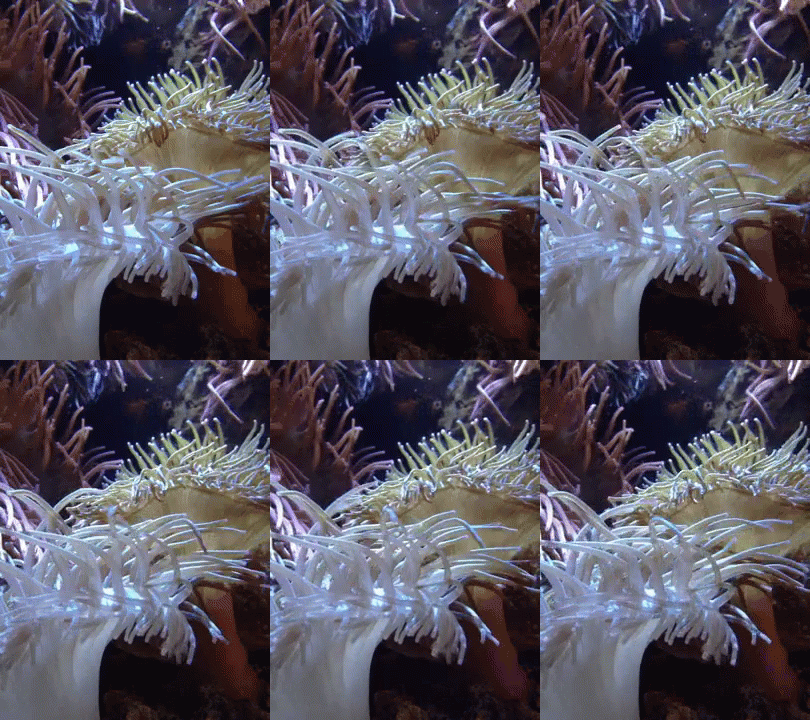
a close up of a sea anemone with a lot of tentacles Alt: a close up of several sea anemones in different colors (white, yellow, brownish orange) waving their tentacles

Science and marine life folks! Does anyone on here study sea anemones (or know someone who does)? I'm particularly interested in talking to someone about the biomechanics of their tentacles and stinging cells. ๐Ÿงช๐Ÿฆ‘

4 months ago 55 13 6 0
Preview
The genome of the holothuroid Parastichopus tremulus The sea cucumber Parastichopus tremulus is an important holothuroid species inhabiting the eastern North Atlantic Ocean benthic zone at depths from about 20 to 3000ย m. Geographical distribution is fro...

cdnsciencepub.com/doi/10.1139/...

To see more about the authors:
Gyda: www.researchgate.net/profile/Gyda...
Roger: www.researchgate.net/profile/Roge...

4 months ago 0 0 1 0

Beyond that, genomic data opens exciting opportunities in bioprospecting, which could lead to innovative products in seafood and health.

This marks a major step forward for marine research, and itโ€™s only the beginning!

4 months ago 0 0 1 0

This breakthrough is crucial for sustainable resource management and enables the development of tools to study populations along the coast.

4 months ago 0 0 1 0
Advertisement
Preview
The genome of the holothuroid Parastichopus tremulus The sea cucumber Parastichopus tremulus is an important holothuroid species inhabiting the eastern North Atlantic Ocean benthic zone at depths from about 20 to 3000ย m. Geographical distribution is fro...

Mรธreforsking's researchers Roger Meisal and Gyda Christophersen has recently mapped and sequenced the genome of the red sea cucumber, published in the journal Genome cdnsciencepub.com/doi/10.1139/...

4 months ago 0 0 1 0

Yet we still know too little about its ecology, biology, and population structure along the Norwegian coast.

To manage this resource responsibly and sustainably, we need deeper knowledge.

Genomic data provides an entirely new level of insight.

4 months ago 1 0 1 0
Preview
The genome of the holothuroid Parastichopus tremulus The sea cucumber Parastichopus tremulus is an important holothuroid species inhabiting the eastern North Atlantic Ocean benthic zone at depths from about 20 to 3000ย m. Geographical distribution is fro...

๐——๐—ถ๐—ฑ ๐˜†๐—ผ๐˜‚ ๐—ธ๐—ป๐—ผ๐˜„ ๐˜๐—ต๐—ฒ ๐—ด๐—ฒ๐—ป๐—ผ๐—บ๐—ฒ ๐—ผ๐—ณ ๐—ผ๐—ป๐—ฒ ๐—ผ๐—ณ ๐—ก๐—ผ๐—ฟ๐˜„๐—ฎ๐˜†โ€™๐˜€ ๐—บ๐—ผ๐˜€๐˜ ๐—ณ๐—ฎ๐˜€๐—ฐ๐—ถ๐—ป๐—ฎ๐˜๐—ถ๐—ป๐—ด ๐—บ๐—ฎ๐—ฟ๐—ถ๐—ป๐—ฒ ๐˜€๐—ฝ๐—ฒ๐—ฐ๐—ถ๐—ฒ๐˜€ ๐—ต๐—ฎ๐˜€ ๐—ฏ๐—ฒ๐—ฒ๐—ป ๐—บ๐—ฎ๐—ฝ๐—ฝ๐—ฒ๐—ฑ?

The red sea cucumber (๐˜—๐˜ข๐˜ณ๐˜ข๐˜ด๐˜ต๐˜ช๐˜ค๐˜ฉ๐˜ฐ๐˜ฑ๐˜ถ๐˜ด ๐˜ต๐˜ณ๐˜ฆ๐˜ฎ๐˜ถ๐˜ญ๐˜ถ๐˜ด) has long captured our interest.

cdnsciencepub.com/doi/10.1139/...

4 months ago 7 0 1 0
Post image

Want to join a global ๐ŸŒŽ initiative to test the thermal limits of ๐ŸŸ using standardised approach? Led by @patricepottier.bsky.social, we are planning a globally distributed experiment to collect data on fish embryonic heat tolerance ๐ŸŒก๏ธ. Make this experiment global!

๐Ÿ”—: www.thermalecologyalliance.org

5 months ago 28 18 0 0
Preview
Why is the Arabian Sea a hotspot for myctophids? Myctophids are the dominant mesopelagic fishes in most of the worldโ€™s oceans. They play a key ecological role and also have a potential for harvest. Wโ€ฆ

Their ability to tolerate low oxygen levels and the regular length of day and night in the study area are also key aspects.

To read more see our paper:
www.sciencedirect.com/science/arti...

MEESO funded by @ec.europa.eu
#Ocean#TwilightZone#MesopelagicFish
#Research
#MarineEcology

4 months ago 2 1 0 0

In the Arabian Sea, the biomass of lanternfishes is particularly high, but dominated by only a few species.

Much of the high production of the Arabian Sea is channelled via zooplankton to the stock of lanternfishes due to the low abundance of competing small pelagic fish.

4 months ago 2 1 1 0

๐—Ÿ๐—ถ๐—ด๐—ต๐˜๐—ถ๐—ป๐—ด ๐˜‚๐—ฝ ๐˜๐—ต๐—ฒ ๐—ง๐˜„๐—ถ๐—น๐—ถ๐—ด๐—ต๐˜ ๐—ญ๐—ผ๐—ป๐—ฒ

Why are so many lanternfishes in the Arabian Sea?

Lanternfishes (Family Myctophidae) are one of the most common and abundant families among the fishes living in the twilight zone and play a key ecological role in the pelagic ecosystems.

4 months ago 4 1 3 0

When I read about the Arabian sea it's mosly focused on the distriburion of benthic snails, Interestign to read about what is going on in other parts of the water column!๐ŸŸ

4 months ago 0 0 0 0

Indian ink, water colours and guach.

Vampire squid by Carl Chun, 1903. Image from the NOAA Photo Library (Public Domain) Bela Lugosi as Dracula, anonymous photograph from 1931, Universal Studios (public domain).

5 months ago 0 0 0 0
Advertisement
Preview
Vampire squid โ€ข MBARI Swift and mysterious, vampire squid are an icon of life in the deep midwater.

So behind the Dracula cape hides not a monster, but a gentle recycler keeping the deep sea clean.

More about the squid:
www.mbari.org/animal/vampi...

#spookyspecies #biodiversity

5 months ago 7 2 1 0
Preview
Vampire squid โ€ข MBARI Swift and mysterious, vampire squid are an icon of life in the deep midwater.

It lives in the dark, deep sea.

But Instead of hunting the living, it drifts silently through the deep, collecting โ€œmarine snowโ€, tiny flakes of dead plankton and detritus sinking from the surface.

5 months ago 1 1 1 0
Preview
Vampire squid โ€ข MBARI Swift and mysterious, vampire squid are an icon of life in the deep midwater.

Here's my take on a vampire squid dressed up as Bela Lugosi's version of Dracula.

Hereโ€™s the twist: it doesnโ€™t drink blood.

5 months ago 1 1 1 0
Post image Post image Post image

I am all in a sea of wonders.ย 

Dracula, Bram Stoker

The vampire squidย Vampyroteuthis infernalis, it's name literally meansย โ€œthe vampire squid from hell.โ€ย 

Sounds like a Halloween nightmare, right?

5 months ago 9 3 2 0

๐ŸชธMarine biologist @trondoskars.bsky.social calls iNaturalist the 'Twitter for species' (let us call it Bluesky for species ๐Ÿ˜†! ) Amateurs post photos + locations of organisms. Researchers and other skilled amateurs then help ID them. The result: verified, open data on #biodiversity.

6 months ago 3 1 1 0