Finally made it back home from #IUWC2025 What a time! Hands down my favorite conference I’ve attended and my first time being a part of this group! Thank you to @tws-uwwg.bsky.social for making this an incredible experience! Definitely plan on attending and presenting again in Milwaukee 2027 😊
On my way home with my fresh-off-the-needles raccoon socks from the best conference in the world. Hope to see everybody again in 2027 in Milwaukee! #IUWC2025
From Akinwale Oladimeji (my academic sibling): Patterns of wildlife occurrence in urban Cape Town 🇿🇦 - there are significant species-level differences, but most species responded negatively to impervious cover #IUWC2025
From Shawn Fujioka: A plant talk at a wildlife conference! Increased management effort by park staff leads to increased native plant biodiversity and reduced threats from invasive species #IUWC2025
From Mark Johnston: Powerline right-of-ways as corridors for movement of wildlife through urban landscapes #IUWC2025
From Nicole Kemon: Bird feeder cleaning is correlated with motives behind feeding birds, with attitudes of care & environmental stewardship leading to more frequent cleaning compared to self-interested feeders #IUWC2025
From @kayleebyers.bsky.social: Based on currently-published literature, we know very little about chronic wasting disease dynamics in urban landscapes #IUWC2025
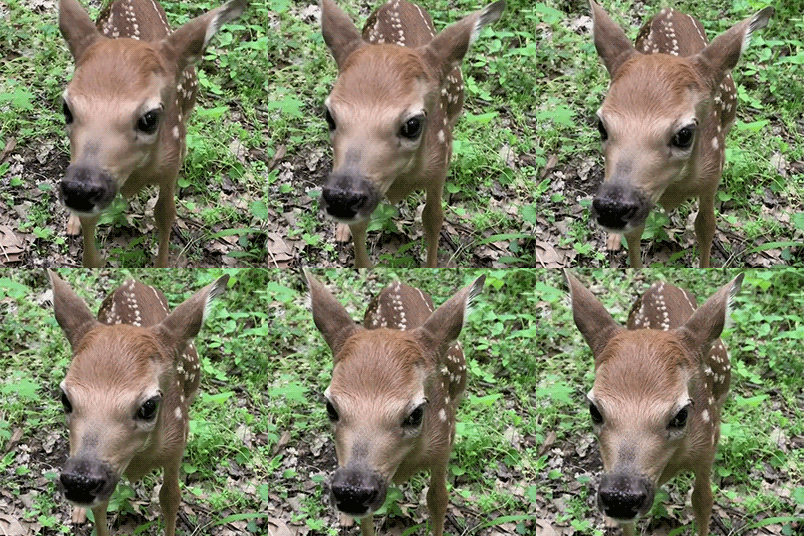
From Zehidul Hussain: Looking forward to seeing the integration of behavioral videos, collar data, and landscape information to understand urban deer ecology #IUWC2025
From Andrea Darracq: An interesting longitudinal (and ongoing!) dataset of coupled human health & biodiversity data to investigate OneHealth mechanisms #IUWC2025
From Andrea Flores: More frequent rat sightings reduces the perceived restorative benefits of connection to nature in Chicago’s urban gardens #IUWC2025
From Marie Lilly: Functional connectivity for deer drives distribution of tick-borne pathogens in New York City #IUWC2025
Ready to (almost) close out the all-day UWIN symposium with my talk on white-footed mice! Come learn about the small warm-fuzzies in the big city! #IUWC2025
From Amanda Zellmer: AI detection tools work really well to catch most target species for wildlife cameras. They just don’t work as well for smaller species like rats/lizards/songbirds #IUWC2025
From Laura Limonciello: A super interesting overview of the state of urban biodiversity research & urban mammal occupancies in Italy 🇮🇹 #IUWC2025
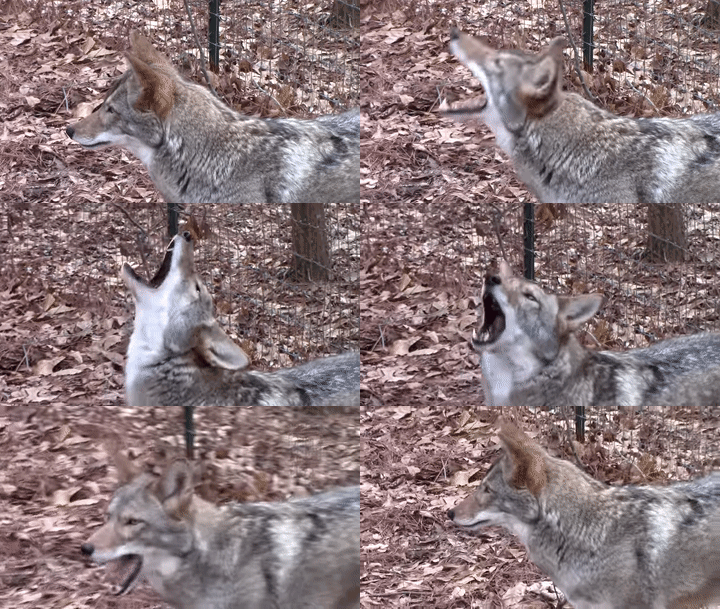
From Taylor Readyhough: Red fox avoidance of coyotes is dynamic and was significantly impacted by COVID lockdowns in Cleveland #IUWC2025
From @sciencewithtyus.bsky.social: Cat temporal oscillation effect - cats alter their space use throughout the day to maximize access to resources (anthro subsidies in residential areas during day; natural areas at night to hunt prey) #IUWC2025
From Emily Blackwell: Raccons may be more susceptible to heat stress, given their responses (site occupancy & activity patterns) to urban heat islands #IUWC2025
Looking forward to future camera collar data from @mellamorooster.bsky.social on urban white-tail deer! #IUWC2025
From @urbanzoochory.bsky.social: Mangy coyotes are more likely to occur in cities with milder winters & higher humidity. Thus, mange could become more common in cities at higher latitudes under climate change #IUWC2025
From Austin Green: Fawning mule deer alter their activity patterns in response to urbanization and coyote presence more strongly than lone deer #IUWC2025
From @testudinidude.bsky.social: cool work emphasizing the importance of species-level variance within bird responses to urbanization #IUWC2025
From Ann Smithson: Even a quirky system is better than no system in the opinions of wildlife management agencies when it comes to conflict reporting systems #IUWC2025
Cool talk on eco forecasting from @masonfidino.bsky.social predicting urban wildlife distributions in unsampled cities #IUWC2025
So ready for the all day UWIN symposium & learning all about my friends’ and colleagues’ cool research! #IUWC2025
Having a great time at #IUWC2025. Saw some amazing talks, and I got maybe the best compliment on my research I've ever received. I'm way too embarrassed to tell you what it was. Tomorrow I'll be co-leading an all-day symposium on UWIN! Can hardly wait!
From @urbanbirdnerd.bsky.social: Different components of urban environments impact song structure & reproduction in different ways in American robins #IUWC2025
From Melissa Gonzalez: Modern birds reflect more heat than historic (1880-1930) birds due to decreases in black carbon air pollution #CollectionsMatter #IUWC2025
From Kate Weiss: Toward a social-ecological-evolutionary-phenotype approach to understand wildlife adaptation to urbanization #IUWC2025
From @wild-summer.bsky.social: LA coyote populations have varying levels of genetic diversity but we’re still trying to understand why, as it’s not easily explained by common urban metrics like impervious surface cover #IUWC2025
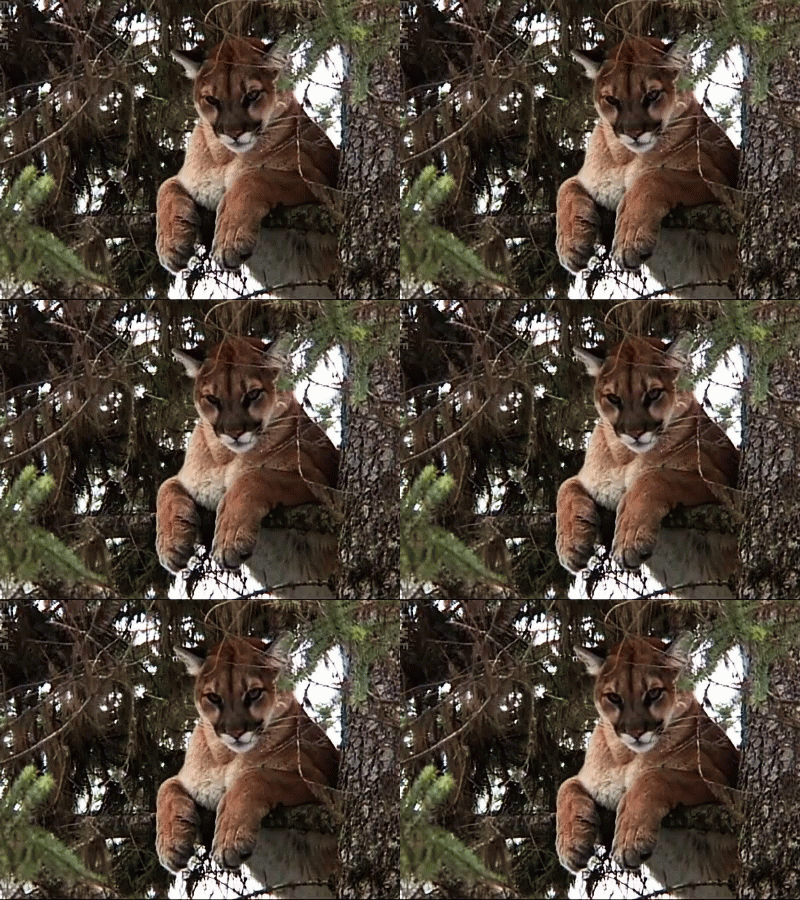
From Cassandra Rodriguez: Traditional pedigree have methods consistently underestimated inbreeding in LA pumas, highlighting the increasingly critical need for wildlife corridors/crossings #IUWC2025