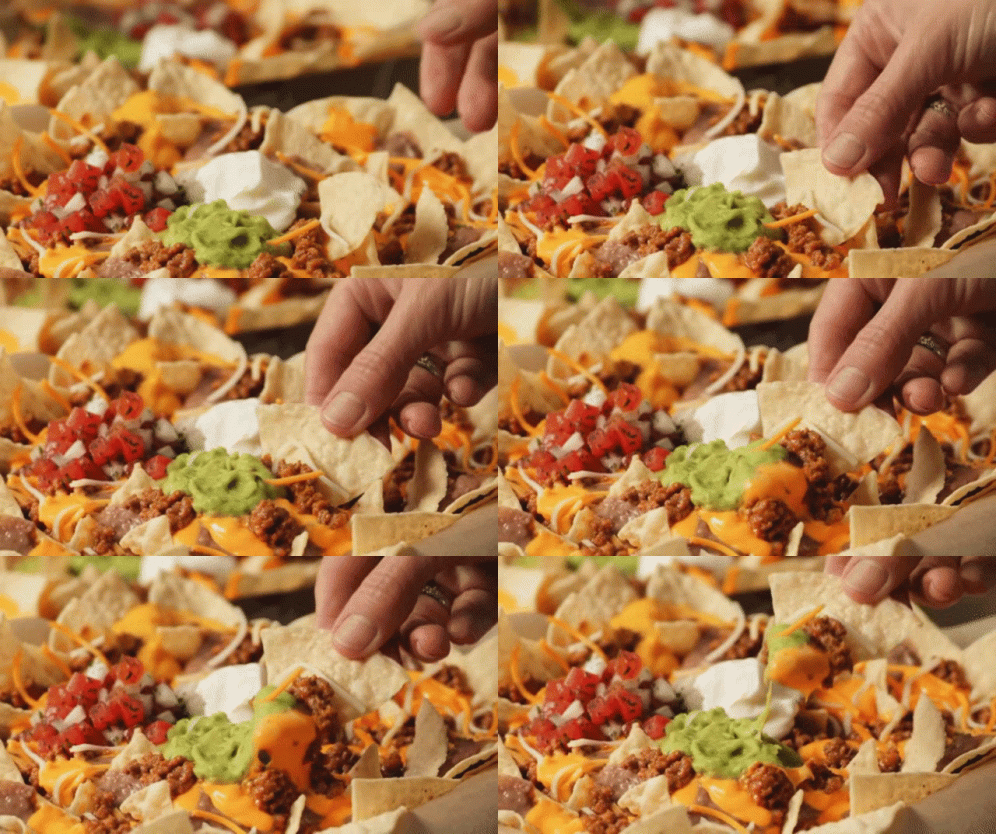
And today, it’s #InternationalNachoDay, in honour of chef Ignacio Anaya, who invented the crispy snack in Piedras Negras in 1943 and named it after himself (Ignacio/Nacho)
7
1
1
0
And today, it’s #InternationalNachoDay, in honour of chef Ignacio Anaya, who invented the crispy snack in Piedras Negras in 1943 and named it after himself (Ignacio/Nacho)
It’s #InternationalNachoDay!
Nachos are often served with a smooth cheese dip—made by adding (tri)sodium citrate, or Na₃C₆H₅O₇, to cheese. It reduces the pH, makes the cheese proteins more soluble & prevents the mix separating.
Ignoring the numbers, its formula spells…

Infographic detailing the chemistry behind four kitchen chemistry hacks. The first is slowing fruit browning. Fruits brown due to oxidation and polymerization of phenols. Adding acids, such as lemon juice, wrapping fruit in cling film or otherwise blocking oxygen slows browning, reducing the activity of the polyphenol oxidase enzyme. You can brown onions more quickly by increasing the pH with baking soda, deprotonating amines so they react with sugars faster. Onions make your eyes water when chopped due to the production of propanethial S-oxide. A sharp knife damages onion cells less, reducing eye-watering reactions. Chilling onions before chopping reduces the rate of the reaction and the volatility of propanethial S-oxide. Warming cheese, water, milk, and sodium citrate makes a stable, smooth cheese sauce. Sodium ions replace calcium ions that hold casein proteins in cheese together. This allows the casein proteins to separate and act as emulsifiers, binding fat and water together
It's #InternationalNachoDay!
This graphic on kitchen chemistry hacks in @cenmag.bsky.social features tips on making a creamy nacho sauce as well as a guac that doesn't brown: cen.acs.org/food/food-sc...