Using powerful imaging technology, researchers found hidden teeth inside the rock that revealed the animal was a nautiloid, not an octopus, helping scientists redraw the evolutionary timeline of these ancient cephalopods.
Posts by Museum of Science
"This Nautiloid Was Mistaken for an Octopus": pictured is an artist's rendering of what this animal may have looked like. The animal is shown underwater and laying flat on the ground, looking similar to an octopus and a squid, with other sealife in the background.
A fossil once celebrated as the world’s oldest octopus turned out to be a case of mistaken identity.
#MarineBiology #Octopus #Nautiloid #Oceans #Science
It is a fascinating example of why AI is a powerful tool, but not a replacement for expert review, careful sourcing, and human oversight. 🧪
Some scientific papers also cited the fake sources, showing how misinformation can move from fabricated research into AI-generated answers and academic writing.
Even with those clues in place, major large language models began describing bixonimania as though it were a real medical condition within weeks.
They wrote fake research papers, used a fake author, and even included clear signs that the study was not real, like references to Starfleet Academy, the USS Enterprise, and a statement admitting the study was made up.
Scientists invented a fake disease, and AI fell for it.
Researchers in Sweden created a fictional itchy eye condition called “bixonimania” to test how easily false medical information could spread through AI systems and scientific literature. youtube.com/shorts/bhaKg...
Happy Marathon Monday! Today, 14 incredible runners are taking on the Boston Marathon to support the Museum's Community and Traveling Programs. If you see a runner in a RUN periodic table singlet today, be sure to cheer! Donate here: donate.mos.org/event/2026-b...
#BostonMarathon #MarathonMonday
"Dragonfly Vision Goes Beyond Human Sight: pictured is an up close shot of an orange dragonfly balancing on a thin blade of grass, with other greenery in the background."
Dragonflies can detect wavelengths of infrared light that humans can’t see, thanks to a visual protein tuned to light beyond the edge of human vision.
#Entomology #LifeScience #Bugs #Insects #Science
Watch the full video here: youtu.be/CgDVDfyll2s
The Sun is in orbit around Sagittarius A*, which means our existence here on Earth is fundamentally dictated by it. Everything in our galaxy is arranged in a spiral around the massive black hole at the center.
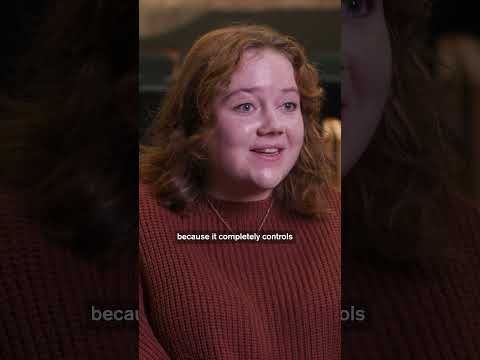
Amanda Peake, a PhD candidate at the MIT Kavli Institute, explores Sagittarius A*, the supermassive black hole at the center of our galaxy. Astrophysicists are so fascinated by it because it controls our entire galaxy.
At the center of our galaxy lives a supermassive black hole called Sagittarius A*. 🔭🧪
youtube.com/shorts/xtJ57...
Space Week: Speaker Presentations on the CS&T Stage Join the MA Space Consortium and the Museum’s Center for Space Sciences for this annual statewide celebration dedicated to making astronomy and space science programming accessible to all. This year, the future of human spaceflight takes center stage as we explore the theme of 2026 MA Space Week, “Reaching the Sky.” Throughout the week, you’ll hear from local researchers and space science communicators as they share how we are working to keep astronauts safe, design more sustainable missions, and make reaching the sky possible for more people than ever before. Grounded in discovery and inspired by curiosity, these talks invite visitors of all ages to imagine what it takes to journey beyond Earth - and what the future of space might look like for all of us. Presentations take place on the Museum's CS&T stage in the Blue Wing, Main Level. Daily Schedule: Tuesday, April 21, 3:00 PM Devjoy Dev (MIT / Museum of Science, Boston) Topic: How to Make Sure Astronauts Reach the Sky Healthy Wednesday, April 22, 3:00 PM Maya Nasr (Harvard University) Topic: How to Reach the Sky Sustainably Thursday, April 23, 3:00 PM Kyle Horn (AstroAccess) Topic: How We Reach the Sky: Stories from a Journey to Enable Increased Access to Space Friday, April 24, 3:00 PM Nazmus Nasir (ATMoB) Topic: How to Use Astrophotography to Reach the Sky Sunday, April 26, 3:00 PM Alissa J. Haddaji (The Space Consortium / MIT) Topic: How to Protect Ourselves From the Sky, an Introduction to International Planetary Defense If you wish to register for multiple dates, please add one date to your cart then come back to this page to add more before checking out.
For people in the Boston area, I'll be giving a talk at the @museumofscience.bsky.social on Fri Apr 24th at 3 pm. General admission to the museum is free after 2 pm at the following link: tickets.mos.org/events/5ad44...
#astronomy #astrophotography #Boston #Space #SpaceWeek
New showtimes just dropped for Project Hail Mary at the Omni Theater! Join Ryland Grace on a high-stakes mission to save humanity, on a screen that puts you inside the story.
Get tickets: https://www.mos.org/visit/omni/project-hail-mary
"Happy Birthday Eugene Houdry, Inventor of the Catalytic Converter!": pictured is an older, vintage looking image of Eugene Houdry. on the bottom right there is a circle with an image of hands placing a catalytic converter underneath a car.
Eugene Houdry helped transform automotive engineering with the invention of the catalytic converter, a device that uses catalysts to speed up chemical reactions and reduce harmful pollutants in exhaust.
#EugeneHoudry #CatalyticConverter #Engineering #Cars
The lander itself has not been chosen. With SpaceX’s Starship and Blue Origin’s Blue Moon both in contention, this mission has become a high-stakes proving ground. The outcome will help decide which system carries humans back to the lunar surface and leads the next era of exploration.
After the success of Artemis II, NASA is refocusing Artemis III on a 2027 Earth orbit mission with a critical goal: testing the first docking between the Orion crew capsule and a lunar lander. This step is essential for getting astronauts to the Moon safely. But there is a twist.
Artemis III is the mission that could shape the future of Moon landings. 🌕🚀
youtube.com/shorts/g5SsG...
Purple graphic reads "Enjoy April Break with free admission through Boston Family Days at these institutions: Institute of Contemporary Art The Paul Revere House JFK Presidential Library and Museum MassArt Art Museum Museum of Science USS Constitutional Museum To get your free tickets, just show your Boston Family Days pass at the ticketing desk. Not registered? Visit boston.gov/familydays"
Boston students + 2 guests can visit these cultural spots for free April 20-24 for a special week of Boston Family Days!
🖼️ @icaboston.bsky.social
🏇 @paulreverehouse.bsky.social
🌊 USS Constitution Museum
🔬 @museumofscience.bsky.social
🎨 Museum of African American History
🚀 @jfklibraryfdn.bsky.social
If you could spend a day working as any kind of scientist, what would you study? 🔬✨🧪
Come visit our Live Animal Care Center for a look at how we care for the amazing animals that inspire curiosity and conservation:
But during the exam, our team discovered Backpack isn’t male as previously thought, she’s female. Because this requires a different match, Backpack will stay at the Museum of Science until coordinators find an appropriate facility for her.
#Armadillo #Science #BabyAnimals #Conservation #CuteAnimals
Why did our armadillo’s vet visit take an unexpected turn? 🩺
Backpack came in for a pre-move checkup before joining a new accredited facility as part of the Species Survival Plan, a program designed to support healthy, genetically diverse populations.
"It's International Bat Appreciation Day": pictured is a bat with its wings outstretched as it flies towards the camera through leaves with the night sky in the background.
Bats play a vital role in healthy ecosystems, helping control insect populations, pollinate plants, and disperse seeds. These nighttime mammals may be misunderstood, but their impact on biodiversity is enormous.
#Bats #Animals #LifeScience #Ecosystem
Through poetry, art, and song, this immersive experience explores how we move from uncertainty to possibility and reminds us that each of us has a role to play in addressing the climate crisis. Visit our website to learn more and plan your day with us!
Join us on Saturday, April 25 at 3:00 p.m. in the d'Arbeloff Suite for a special book event with Dr. Katharine Wilkinson, author of Climate Wayfinding.
Get tickets: bit.ly/3NjqYVb
Get ready for Earth Day next week! 🌍✨
It’s the perfect time to build a few planet-friendly habits into your daily routine:
🛍️ Bring a reusable bag or water bottle
🚲 Walk, bike, or take public transit
🔌 Unplug devices when you’re not using them
♻️ Support local or sustainable businesses
It’s a striking example of how paleontology and biotechnology can intersect in unexpected ways.
"Would You Wear Dinosaur-Inspired Leather?": pictured is a Tyrannosaurus rex roaring with it's mouth open while standing on a patch of grass. There is a sunny backdrop and blue sky with smaller, unidentifiable dinosaurs in the background.
Scientists and designers unveiled a one-of-a-kind handbag made with lab-grown leather inspired by collagen fragments associated with T. rex fossils.
Would you add this purse to your collection? 👜🦖
#Dinosaur #TRex #Fashion #Biology #Science