Advertisement · 728 × 90

Posts by Kelly Lepo

A tightly cropped Hubble view of a vast star-forming region known as the Trifid Nebula. The top left is bright blue. Brown and amber colors run from top right through the center in irregular, overlapping lines to the bottom-center. At bottom right, the view is almost black. Tiny, amber-colored stars appear throughout the scene. Toward the left there is a prominent brown shape that looks like a head with two horns. The left horn points left and is wavy. The right horn is triangular and points up. The brown dust continues, flowing down, as if along a back, and up toward the top right. A prominent line, about the same length as the left horn, appears below the middle of the body, and changes from orange to red. A small, separate semi-transparent pillar is left of the head. A few slightly larger, blue foreground stars with four diffraction spikes appear sprinkled throughout.

A tightly cropped Hubble view of a vast star-forming region known as the Trifid Nebula. The top left is bright blue. Brown and amber colors run from top right through the center in irregular, overlapping lines to the bottom-center. At bottom right, the view is almost black. Tiny, amber-colored stars appear throughout the scene. Toward the left there is a prominent brown shape that looks like a head with two horns. The left horn points left and is wavy. The right horn is triangular and points up. The brown dust continues, flowing down, as if along a back, and up toward the top right. A prominent line, about the same length as the left horn, appears below the middle of the body, and changes from orange to red. A small, separate semi-transparent pillar is left of the head. A few slightly larger, blue foreground stars with four diffraction spikes appear sprinkled throughout.

Hubble marks its 36th anniversary with a shimmering close-up of star-formation in the Trifid Nebula! Tiny, actively forming stars are eating and spewing material all around. (One at top left in brown, and two fiery red jets.) Explore it all: https://news.stsci.edu/4cvi5jL

22 hours ago 196 69 5 7
An astronomical image featuring the backdrop of the dark night sky with a faint grey-blue speckle at the centre. The nebulous cloud has the shape of a four-leaf flower. Four orange laser beams are pointing to it.

An astronomical image featuring the backdrop of the dark night sky with a faint grey-blue speckle at the centre. The nebulous cloud has the shape of a four-leaf flower. Four orange laser beams are pointing to it.

This isn't a scene from #StarWars.

What you're looking at is the Tarantula Nebula. While those beams come from the lasers installed on the telescopes that comprise our VLTI.

But why are we sending lasers into the sky? Find out: https://www.eso.org/public/images/potw2616a/

🔭 🧪
📷 A. Berdeu/ESO

1 day ago 98 33 4 11
Preview
NASA Shuts Off Instrument on Voyager 1 to Keep Spacecraft Operating - NASA Science On April 17, engineers at NASA’s Jet Propulsion Laboratory (JPL) in Southern California sent commands to shut down an instrument aboard Voyager 1 called the

NASA Shuts Off Instrument on Voyager 1 to Keep Spacecraft Operating

The Low-energy Charged Particles experiment has been operating almost without interruption since Voyager 1 launched in 1977 - almost 49 years. 🧪🔭 #Voyager

science.nasa.gov/blogs/voyage...

2 days ago 306 125 6 33
A black, single-layer cake. The top is decorated with a pastel-rainbow telescope and galaxy map behind it.

A black, single-layer cake. The top is decorated with a pastel-rainbow telescope and galaxy map behind it.

A different view of the cake, showing the galaxy map spilling over the side.

A different view of the cake, showing the galaxy map spilling over the side.

DESI finished its originally planned survey last night!! ..and will keep going :)

I made a cake to celebrate. 🌌🔭
@desisurvey.bsky.social

5 days ago 761 98 21 5

THIS is how you do #Astro alt text!
People that rely on alt text to understand what has been posted, or just curious minds, are not helped *at all* by just stating that the image is 'a galaxy', your gear list, or only the catalog number.
It takes little effort to do better.
🧪 #📷

1 week ago 27 5 1 0

Science is good. We should fund it.

1 week ago 12637 2530 135 65

But their largest contractor does not also own the everything app.

1 week ago 4 0 2 0
Advertisement
A screenshot of the part of the accessibility settings with the option of “Require alt text before posting” selected

A screenshot of the part of the accessibility settings with the option of “Require alt text before posting” selected

Reminder: including alt-text on your images is helpful in many ways! It increases accessibility, can add context/detail, makes search more effective, & can improve your reach (a lot of us won’t re-share images without alt-text). If you set it as required in accessibility settings, you can’t forget!

2 weeks ago 1544 494 38 24
Spectacular high-resolution image of our home planet viewed through the Orion Crew Module window by the Artemis II astronauts as they continue their journey to the Moon on Flight Day 2, 3 April 2026 (pic: NASA)

Spectacular high-resolution image of our home planet viewed through the Orion Crew Module window by the Artemis II astronauts as they continue their journey to the Moon on Flight Day 2, 3 April 2026 (pic: NASA)

A full disc image of Earth, as seen from the Orion Crew Module. The planet is a pale blue, swirling with white clouds and glowing slightly lighter blue in place from reflected light. At lower left, a large brown landmass is Africa, with Spain and Portugal with twinkling lights where the planet curves. At top right, auroras glow in a thin green glow, just barely separated from the planet's surface. Earth is set against the black of space (pic: NASA/R.Wiseman)

A full disc image of Earth, as seen from the Orion Crew Module. The planet is a pale blue, swirling with white clouds and glowing slightly lighter blue in place from reflected light. At lower left, a large brown landmass is Africa, with Spain and Portugal with twinkling lights where the planet curves. At top right, auroras glow in a thin green glow, just barely separated from the planet's surface. Earth is set against the black of space (pic: NASA/R.Wiseman)

😮 Awesome views from Day 2 of #Artemis II this morning.

@exploration.esa.int @esaearth.esa.int

2 weeks ago 2894 1061 23 172
A full disc image of Earth, as seen from the Orion Crew Module. The planet is a pale blue, swirling with white clouds and glowing slightly lighter blue in place from reflected light. At lower left, a large brown landmass is Africa, with Spain and Portugal with twinkling lights where the planet curves. At top right, auroras glow in a thin green glow, just barely separated from the planet's surface. Earth is set against the black of space (pic: NASA/R.Wiseman)

A full disc image of Earth, as seen from the Orion Crew Module. The planet is a pale blue, swirling with white clouds and glowing slightly lighter blue in place from reflected light. At lower left, a large brown landmass is Africa, with Spain and Portugal with twinkling lights where the planet curves. At top right, auroras glow in a thin green glow, just barely separated from the planet's surface. Earth is set against the black of space (pic: NASA/R.Wiseman)

More context on this #Artemis II image:

* This is the night side, lit by moonlight. You can see city lights in Spain & Portugal, & a sliver of day at lower right

* The Sun is entirely behind Earth, which makes it a kind of solar eclipse, but w/ Earth doing the eclipsing instead of the Moon:
☀️🌍🚀🌕

2 weeks ago 13119 3713 234 321

It’s not aliens.

3 weeks ago 401 44 7 2
Preview
Standards

But also
xkcd.com/927/

3 weeks ago 3 2 0 0

And then sometimes the books are in order on the shelf by their call number and sometimes they are in the order the library acquired the book. It will be a surprise which system they are using because the librarians can't agree.

3 weeks ago 2 0 1 0

Imagine going to a library and having to open up the SIMBAD equivalent first to find the right call number for your book because the library uses like 100 different catalogs at once.

3 weeks ago 2 0 1 0

I'm fine with the catalog numbers, even catalog numbers + common name for the interesting planets, but maybe pick one catalog? And order things consistently? (also sincere)

3 weeks ago 4 0 1 0
Advertisement

Astronomers are bad at naming things and should not be allowed to name anything.

3 weeks ago 41 1 7 2
Tour the Crab Nebula
Tour the Crab Nebula This video highlights details in NASA's Hubble Space Telescope images of the Crab Nebula. Hubble's first observation of the full nebula began in 1999, and 25 years later it captured a new portrait. Hubble's longevity and powerful instruments provide ast...

Tour the Crab Nebula, the supernova remnant discovered in the mid-18th century. Hubble recently took a fresh look, tracking 25 years of expansion. 🔭

4 weeks ago 29 9 0 0
Video

Watch as the Crab Nebula changes over time with Hubble. Two images, taken 25 years apart, show the ongoing expansion of a supernova remnant: https://news.stsci.edu/4bAN6m4 🔭

4 weeks ago 83 32 1 1
Preview
Rocky Worlds DDT Data Challenge and Data Challenge Workshop — Save the Date

For hunters of rocky worlds: save the date! 🔭 #astrocode

We're preparing a Data Challenge modeled after the 2015 Spitzer Exoplanet Data Challenge, this time with MIRI observations from the Rocky Worlds DDT program.

1 month ago 12 5 0 1
Comet Halley's nucleus as seen by Giotto. A lumpy, elongated comet nucleus fills most of the frame, set against deep black space. Bright, hazy jets of gas and dust stream from sunlit areas on the right-hand side, creating a faint glowing veil.

Comet Halley's nucleus as seen by Giotto. A lumpy, elongated comet nucleus fills most of the frame, set against deep black space. Bright, hazy jets of gas and dust stream from sunlit areas on the right-hand side, creating a faint glowing veil.

40 years ago, the Giotto mission was writing history: 

🛰️ ESA's first deep space mission
☄️ first cometary close flyby
⏰ and later on, first reactivation of a spacecraft

The success of Giotto inspired our Rosetta mission and together laid the foundation for our Comet Interceptor mission. 🔭 🧪 1/3

1 month ago 198 49 2 6

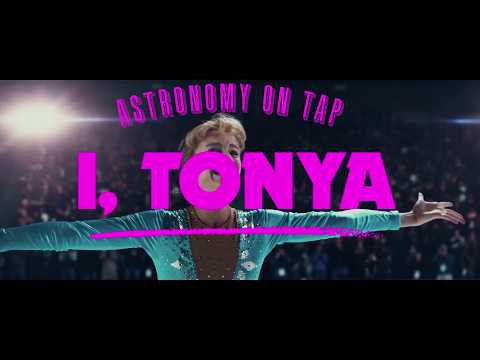
Did I think that most people would get the references to an almost 10 year old movie (I, Tonya) or an almost 20-year-old movie (Blades of Glory)? No. Did I care? Also no.

1 month ago 4 0 0 0

They asked me to do a video themed on the Winter Olympics. It turns out that there are not a lot of movies that involve winter sports, so it was either figure skating or Cool Runnings.

1 month ago 3 0 1 0
YouTube
YouTube Share your videos with friends, family, and the world

Intro video I made for last night's @aot-baltimore.bsky.social :
I, Tonya, but the Figure Skaters are Astronomers

www.youtube.com/watch?v=lm3k...

1 month ago 6 0 1 1
Illustration of Webb's hexagonal mirror segments each showing a different space image centered on a starry background.

Illustration of Webb's hexagonal mirror segments each showing a different space image centered on a starry background.

The Space Telescope Science Institute has announced the selection of 254 James Webb Space Telescope Cycle 5 General Observer programs: https://news.stsci.edu/4bneuDE 🔭 🧪 #NASAWebb

1 month ago 68 14 1 1
Advertisement
Preview
NASA’s Dragonfly Mission Begins Rotorcraft Integration, Testing Stage - NASA Science NASA Dragonfly’s integration and testing – the activities involved in assembling the mission’s rotorcraft lander and testing it for the rigors of launch and

A long time coming…

science.nasa.gov/blogs/dragon...

1 month ago 136 28 2 11
Email from Chris Reynolds to the AXIS Team. Subject is disappointing AXIS news. Text of e-mail reads: Dear AXIS Friends,


The AXIS team has received some very disappointing news – we have been informed by NASA HQ that AXIS is not eligible for selection and hence the Concept Study Report (CSR) will not be subjected to the full review process.   


AXIS represents the scientific aspirations of a large international community. As a member of one of the AXIS science working groups, you deserve a candid explanation from the PI of what happened and why.  That is the purpose of this note.


NASA’s decision was programmatic and not based on a review of the technology or science; the mission profile described in the submitted CSR was over the allowed budget and schedule.  How was such a thing possible?   In short, with NASA-GSFC as the AXIS managing center, the mission formulation process was critically compromised by the seismic shifts occurring in NASA and the Federal government.  The AXIS study team was hit hard by three unprecedented challenges: 


NASA’s Deferred Resignation Program (DRP) and the pressure at GSFC to resign/retire created a rapid and uncontrolled loss of over 20 personnel with key expertise during a critical mission formulation period, including the main GSFC Project Manager (Jimmy Marsh) and the X-ray mirror lead (Will Zhang) and many discipline engineers.

Email from Chris Reynolds to the AXIS Team. Subject is disappointing AXIS news. Text of e-mail reads: Dear AXIS Friends, The AXIS team has received some very disappointing news – we have been informed by NASA HQ that AXIS is not eligible for selection and hence the Concept Study Report (CSR) will not be subjected to the full review process. AXIS represents the scientific aspirations of a large international community. As a member of one of the AXIS science working groups, you deserve a candid explanation from the PI of what happened and why. That is the purpose of this note. NASA’s decision was programmatic and not based on a review of the technology or science; the mission profile described in the submitted CSR was over the allowed budget and schedule. How was such a thing possible? In short, with NASA-GSFC as the AXIS managing center, the mission formulation process was critically compromised by the seismic shifts occurring in NASA and the Federal government. The AXIS study team was hit hard by three unprecedented challenges: NASA’s Deferred Resignation Program (DRP) and the pressure at GSFC to resign/retire created a rapid and uncontrolled loss of over 20 personnel with key expertise during a critical mission formulation period, including the main GSFC Project Manager (Jimmy Marsh) and the X-ray mirror lead (Will Zhang) and many discipline engineers.

GSFC priorities rapidly realigned to the FY2026 President’s Budget Request (PBR) that eliminated the Probe program, further reducing the availability of GSFC engineering and mission formulation personnel (incl. cost analysts and schedulers) over the critical Summer and Fall months. Key work was halted for almost seven weeks when the core GSFC AXIS study team, dominated by NASA civil servants, was furloughed during the government shutdown.  NASA HQ’s extension to the CSR submission deadline (from 18-Dec-2025 to 29-Jan-2026) was inadequate compensation for the disruption and lost time.


Taken together, these factors disrupted the basic grass-roots costing process (which requires extensive “reach back” to the discipline engineers to assess labor requirements) as well as the cost-design iteration process that is central to the formulation of a cost-capped and schedule-constrained mission.  While the mission design was finalized in April, our initial grass-roots costing (which was ~10% over budget) could only be completed in September due to the lack of assigned resources.  With the subsequent government shutdown and then “pens down” in early-December forced by the GSFC Executive Review process, there was no opportunity to work through the set of cost/schedule savings that had already been identified by the AXIS team. 


Ultimately, the GSFC executive council gave AXIS leadership the choice of submitting a CSR with a non-compliant schedule and cost, or not submitting a CSR at all.  We of course proceeded with the submission, including a narrative that we understood the path to a cost-compliant profile (that we would have discussed with the review panels during the Site Visit). NASA HQ has ruled this stance to be unacceptable.


It is important to stress that NASA’s programmatic decision was before any technical review had been conducted.  The decision was NOT due to any concerns about AXIS technology. Indeed, the AXIS Phase A work had major successes with furthering

GSFC priorities rapidly realigned to the FY2026 President’s Budget Request (PBR) that eliminated the Probe program, further reducing the availability of GSFC engineering and mission formulation personnel (incl. cost analysts and schedulers) over the critical Summer and Fall months. Key work was halted for almost seven weeks when the core GSFC AXIS study team, dominated by NASA civil servants, was furloughed during the government shutdown. NASA HQ’s extension to the CSR submission deadline (from 18-Dec-2025 to 29-Jan-2026) was inadequate compensation for the disruption and lost time. Taken together, these factors disrupted the basic grass-roots costing process (which requires extensive “reach back” to the discipline engineers to assess labor requirements) as well as the cost-design iteration process that is central to the formulation of a cost-capped and schedule-constrained mission. While the mission design was finalized in April, our initial grass-roots costing (which was ~10% over budget) could only be completed in September due to the lack of assigned resources. With the subsequent government shutdown and then “pens down” in early-December forced by the GSFC Executive Review process, there was no opportunity to work through the set of cost/schedule savings that had already been identified by the AXIS team. Ultimately, the GSFC executive council gave AXIS leadership the choice of submitting a CSR with a non-compliant schedule and cost, or not submitting a CSR at all. We of course proceeded with the submission, including a narrative that we understood the path to a cost-compliant profile (that we would have discussed with the review panels during the Site Visit). NASA HQ has ruled this stance to be unacceptable. It is important to stress that NASA’s programmatic decision was before any technical review had been conducted. The decision was NOT due to any concerns about AXIS technology. Indeed, the AXIS Phase A work had major successes with furthering

Indeed, the AXIS Phase A work had major successes with furthering the key technologies. GSFC’s Next Generation X-ray Optics (NGXO) team successfully demonstrated iridium-coated, stress-compensated mirror segments that meet AXIS baseline requirements (i.e. segment-level performance at sub-arcsecond level).  NGXO also built the first AXIS demonstrator mirror module, learning critical lessons about mirror alignment, mounting and bonding. On the detector side, MIT quickly moved to fabricate AXIS-like CCDs and, working with our colleagues at Stanford, recently demonstrated that they achieve the required readout rate and spectral resolution. 


Similarly, NASA’s decision was NOT a judgment of the importance of AXIS science.  The AXIS science case was rated excellent in the Step 1 review, and it only became stronger during our Phase A study.  The AXIS Community Science Book, which many of you contributed to, is an extremely powerful demonstration of the relevance and importance of high-resolution X-ray observations to all areas of astrophysics. The Science Book is one of the most important legacies of the AXIS Phase A study and, I believe, will help define future mission concepts for many years to come.  I thank you all from the bottom of my heart for all of your work on this.


AXIS has been a long journey; we started under the leadership of Richard Mushotzky more than nine years ago.  During that time, it’s been an enormous privilege to work with amazing people; the AXIS science team, the incredible/brilliant GSFC and Northrop Grumman engineers, and the wider astrophysics community.  I am, quite frankly, livid that AXIS ultimately fell victim to the programmatic chaos of 2025. The astronomical community deserves better. I hope that NASA leadership, especially at GSFC and HQ, can have an honest discussion about how to better support and protect programs during extraordinary times.

Indeed, the AXIS Phase A work had major successes with furthering the key technologies. GSFC’s Next Generation X-ray Optics (NGXO) team successfully demonstrated iridium-coated, stress-compensated mirror segments that meet AXIS baseline requirements (i.e. segment-level performance at sub-arcsecond level).  NGXO also built the first AXIS demonstrator mirror module, learning critical lessons about mirror alignment, mounting and bonding. On the detector side, MIT quickly moved to fabricate AXIS-like CCDs and, working with our colleagues at Stanford, recently demonstrated that they achieve the required readout rate and spectral resolution. Similarly, NASA’s decision was NOT a judgment of the importance of AXIS science. The AXIS science case was rated excellent in the Step 1 review, and it only became stronger during our Phase A study. The AXIS Community Science Book, which many of you contributed to, is an extremely powerful demonstration of the relevance and importance of high-resolution X-ray observations to all areas of astrophysics. The Science Book is one of the most important legacies of the AXIS Phase A study and, I believe, will help define future mission concepts for many years to come. I thank you all from the bottom of my heart for all of your work on this. AXIS has been a long journey; we started under the leadership of Richard Mushotzky more than nine years ago. During that time, it’s been an enormous privilege to work with amazing people; the AXIS science team, the incredible/brilliant GSFC and Northrop Grumman engineers, and the wider astrophysics community. I am, quite frankly, livid that AXIS ultimately fell victim to the programmatic chaos of 2025. The astronomical community deserves better. I hope that NASA leadership, especially at GSFC and HQ, can have an honest discussion about how to better support and protect programs during extraordinary times.

For now, as a community, we must look forward. There is still one excellent mission under consideration for the Probe program, PRIMA, and we wish them a smooth and speedy path to selection and flight.  In X-ray astronomy, the SMEX and MidEX programs represent concrete pathways for focused, high-impact missions, and the scientific case we built for AXIS provides a strong foundation for those concepts. The technologies we advanced in Step 1 and Phase A, particularly the NGXO mirror work and the MIT/Stanford detector demonstrations, can anchor the next generation of proposals. Most importantly, the AXIS Community Science Book, representing more than 500 scientists across, is a living document and a powerful signal to NASA leadership that this community is organized, serious, and not going anywhere. I encourage everyone to use it actively, as a resource for future concept development, for Astro2030 engagement, and for building the next mission that will deliver high angular resolution X-ray imaging to address the fundamental questions about black hole growth, galaxy evolution, and the hot universe that motivated AXIS from the beginning. This community built something remarkable over nine years and that doesn't end here.


Thank you again for your support of AXIS over these times.


Best

Chris and the AXIS leadership team

For now, as a community, we must look forward. There is still one excellent mission under consideration for the Probe program, PRIMA, and we wish them a smooth and speedy path to selection and flight. In X-ray astronomy, the SMEX and MidEX programs represent concrete pathways for focused, high-impact missions, and the scientific case we built for AXIS provides a strong foundation for those concepts. The technologies we advanced in Step 1 and Phase A, particularly the NGXO mirror work and the MIT/Stanford detector demonstrations, can anchor the next generation of proposals. Most importantly, the AXIS Community Science Book, representing more than 500 scientists across, is a living document and a powerful signal to NASA leadership that this community is organized, serious, and not going anywhere. I encourage everyone to use it actively, as a resource for future concept development, for Astro2030 engagement, and for building the next mission that will deliver high angular resolution X-ray imaging to address the fundamental questions about black hole growth, galaxy evolution, and the hot universe that motivated AXIS from the beginning. This community built something remarkable over nine years and that doesn't end here. Thank you again for your support of AXIS over these times. Best Chris and the AXIS leadership team

The @axisprobe.bsky.social team learned that the phase A concept study report of AXIS (the Advanced X-ray Imaging Satellite) will not be reviewed because the lost personnel at NASA Goddard and government shutdown impacted our schedule and budget. 🔭 Here is the PI's e-mail with the explanation.

1 month ago 239 98 23 28

If you ever want to read a paper for free and can't find it otherwise, email the lead author and politely ask for a copy. You will not be bothering the person. You will in fact make their whole entire day. I have had scientists get so excited I asked they sent me everything they ever published.

1 month ago 2801 989 17 40
Two images of a planetary nebula in space. The image to the left, labelled “Euclid & Hubble”, shows the whole nebula and its surroundings. A star in the very centre is surrounded by white bubbles and loops of gas, all shining with a powerful blue light. Farther away a broken ring of red and blue gas clouds surrounds the nebula. The background shows many stars and distant galaxies. A white box indicates the centre of the nebula and this region is the image to the right, labelled “Hubble”. It shows the multi-layered bubbles, pointed jets and circular shells of gas that make up the nebula, as well as the central star, in greater detail.

Two images of a planetary nebula in space. The image to the left, labelled “Euclid & Hubble”, shows the whole nebula and its surroundings. A star in the very centre is surrounded by white bubbles and loops of gas, all shining with a powerful blue light. Farther away a broken ring of red and blue gas clouds surrounds the nebula. The background shows many stars and distant galaxies. A white box indicates the centre of the nebula and this region is the image to the right, labelled “Hubble”. It shows the multi-layered bubbles, pointed jets and circular shells of gas that make up the nebula, as well as the central star, in greater detail.

Wowowow - our @science.esa.int Hubble's picture of the month for March is the Cat's Eye Nebula, from combined images of #Hubble and #Euclid. Euclid's wide field and low surface brightness sensitivity brings out an external shell. Incredible image. esahubble.org/images/potm2... 🔭

1 month ago 57 17 1 0
Preview
Total Lunar Eclipse on March 2–3, 2026 – Where and When to See Total lunar eclipse on March 2–3, 2026: Where and when is the Blood Moon visible and what will it look like? Visibility map, animation, and local times.

🌕➡️🔴 Lunar eclipse alert!

Depending on where you are (mostly: Central/Eastern Asia, Oceania, most of North/Central America), you may be able to see a TOTAL LUNAR ECLIPSE ("blood moon") overnight!

You can find information about timing and viewing locations here: www.timeanddate.com/eclipse/luna...

1 month ago 423 187 18 37
Post image

Join us next Thursday, March 12th, at Guilford Hall Brewery for an exciting evening of space knowledge!
Doors open at 7:00 pm, talks start at 7:30 pm. The event is FREE and open to the public!

1 month ago 6 3 1 1