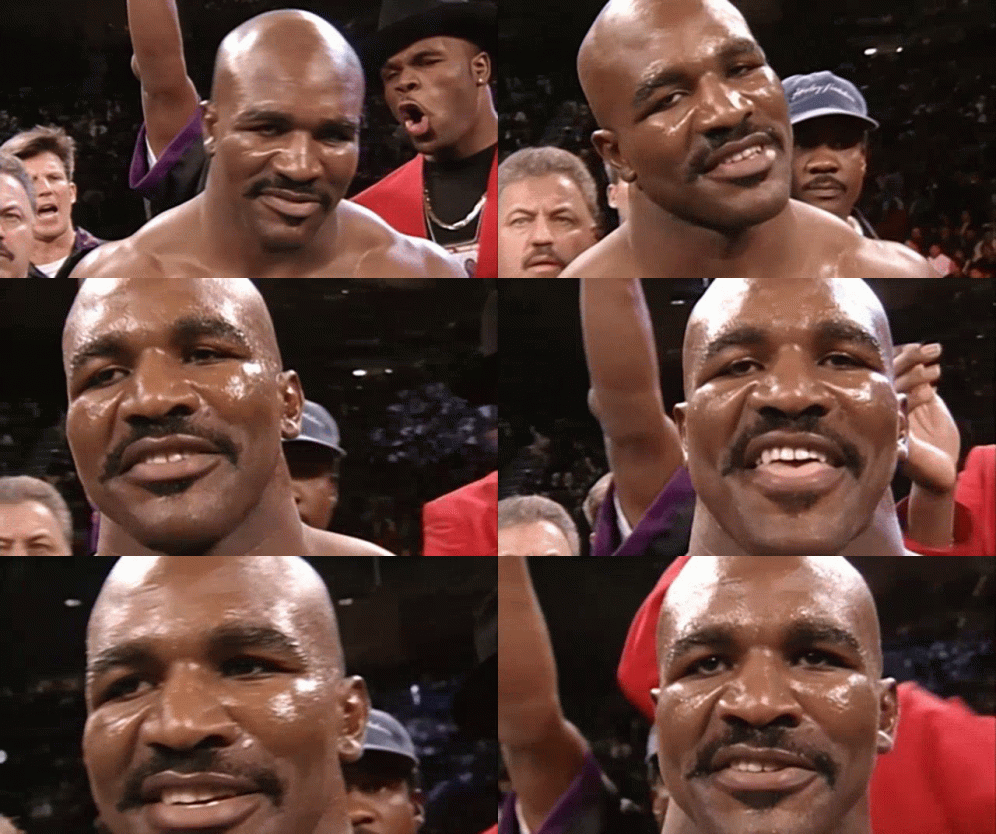
Holyfield Warns Corporate Bosses Will Take Boxing’s Soul
The fight for boxing’s future is heating up in Congress, and the sport’s biggest names are speaking out. Boxing legend Evander Holyfield is publicly warning that proposed changes to the Muhammad Ali Boxing Reform Act could hand control of the sport to corporate interests, creating a UFC-style closed league.
“When I fought, I did my talking in the ring. Once the bell rang, it was all on me—my training, my choices, my courage. That’s the way of boxing. You control your destiny,” Holyfield said in a Wall Street Journal editorial.
“Now I’m speaking out because lawmakers are trying to take that control away. A new bill called the Muhammad Ali American Boxing Revival Act would give boxing over to corporate bosses, burying fighters with lower standards and less pay,” he added, issuing a warning to fighters thinking of joining these leagues.
Holyfield slammed the notion that the bill expands the original Ali Act, passed in 2000. “This new law is exactly what the original Ali Act was written to stop. When Ali’s name went on the law back then, it meant something. It protected fighters from being owned by promoters. It gave fighters the right to see what bosses earned from their work. It required improved health and safety standards: medical exams, drug testing, ringside doctors, and insurance. It gave boxing structure without taking away freedom.”
Unified Boxing Organizations: A Threat to Fighters?
Introduced by Reps. Brian Jack (R., Ga.) and Sharice Davids (D., Kan.), the legislation would create “Unified Boxing Organizations”—private leagues controlling champions, rankings, and fights. Holyfield warned these leagues could strip fighters of control: “In other words, a company could control every part of the league.”
Boxing’s Decentralized Strength
WBC President Mauricio Sulaimán backs Holyfield’s concerns. In his Round 12 column on the subject, Sulaimán stressed boxing’s decentralized structure as a key safeguard.
“In boxing, the sanctioning bodies are only in charge of regulatory, medical, and boxing-related matters, while promotional companies like Don King, Bob Arum, PBC, Matchroom, Queensberry, and Oscar de la Hoya control all aspects of the business. All WBC decisions are based on rules and justice without any financial benefit,” he said.
“This is a business structure that gives those leagues all the power to do anything they wish. In boxing, we preserve the athlete’s voice and freedom.”
The proposed changes, pushed by TKO Group under Saudi-backed initiatives, would centralize power over promotions, rankings, and championship belts—creating a UFC-style league, Sulaimán warned.
He also highlighted boxing’s global ecosystem: “It’s an industry of open competition where the promoters, with their skills, create stars, and the boxers, with their performance, earn the public’s affection, admiration, and adoration.” Legends such as Manny Pacquiao, Mike Tyson, and Canelo Álvarez prove the system works.
Sulaimán cautioned that a corporate model could threaten safety: “While the safety of the boxer is being looked after, pseudo-sports continue to emerge that are brutal and inhumane, making the Roman circus seem like a child’s game.”
Regulators Push Back
The California State Athletic Commission (CSAC) has also raised concerns. Commissioner AnnMaria DeMars said, “I’m very concerned that all the public comments went in one direction. There’s no point in having public comment if we don’t pay attention to it. These are the people who stand in that ring and show what they’re made of, and they are very much concerned about this.”
Manager Rachel Donaire, wife and adviser to future Hall of Famer Nonito Donaire, warned that the proposed United Boxing Organization (UBO) framework would cap fighter purses and gut their negotiation power. “They strip fighters of negotiation power before they even sit down. They say they don’t take sanctioning fees, but why would they need to if they’re cutting off our paydays at the knees? What good is a belt if it leaves you broke?”
Holyfield drove home the point: “This isn’t just about fights or belts. It’s about the fighters. Their careers, their safety, their rights. And we can’t let that be taken away.”
The Fight for Boxing’s Soul
As discussions continue in Congress and across the sport, Holyfield, Sulaimán, and the CSAC represent a rare, unified voice defending the traditions, safety, and freedom that have defined boxing for decades.
For boxing, the next round may not be fought with gloves, but the stakes are just as high—and those inside the ring and outside it are ready to fight back.
About the Author
Phil Jay is a veteran boxing journalist with over 15 years of experience covering the global fight scene. As Editor-in-Chief of World Boxing News (WBN) since 2010, Jay has interviewed dozens of world champions and reported ringside on boxing’s biggest nights.
View all articles by Phil Jay and learn more about his work in combat sports journalism.
Stay Ahead in Boxing News
Subscribe to the free WBN Newsletter for trusted updates, exclusive interviews, and fight analysis delivered daily.
Join the World Boxing News WhatsApp Channel or follow WBN on Linktree.