The ceiling of the Castro Theatre in San Francisco is a masterwork by architect Timothy Pflueger, designed to represent a cultural "mishmash" that touches on many aspects of the arts.
Design and Symbolism
The ceiling's primary structure is a unique leatherette canopy intended to evoke the open-air feel of a Roman amphitheater or an "Eastern tent". Pflueger reportedly drew inspiration for its intricate patterns from ancient priest robes and oriental cloths he discovered while scouring shops in San Francisco.
Within the ceiling are 16 unique oval medallions (rondelles), which were recently restored to reveal mythological and artistic figures that had been obscured by decades of residue. Key figures and their meanings include:
Quetzalcoatl: A prominent figure appears to depict this Aztec "feathered serpent" deity, a symbol of death and resurrection often referred to as "The Dragon of the New World".
Pan Flute Player: This figure is a clear representation of music.
A Half-Goat Faun: Likely depicting Puck from Shakespeare’s A Midsummer Night’s Dream, which was popular when the theater was built in 1922.
Dragons: The interior features at least 32 dragons that frame the ovate shapes, potentially nodding to both Asian art and the 9th-century Book of Kells.
Recent Restoration
Following a major $41 million renovation completed in early 2026, these details were meticulously cleaned of nicotine and polyurethane layers that had turned milky and dark over time. The restoration returned the ceiling to its 1937 appearance, which included the addition of its famous Art Deco chandelier and newly gilded rondelles.

The Castro Theatre, designed by renowned architect Timothy Pflueger and opened in 1922, is one of the few remaining "movie palaces" in the United States. Its architecture is a grand blend of Spanish Colonial Baroque, Art Deco, and Italian Renaissance styles.
The Exterior & Building
Facade: The most striking external feature is the Spanish Colonial Baroque (Churrigueresque) facade, characterized by its deep, ornate plaster carvings and large arched windows.
Neon Signage: The building is anchored by a massive neon blade sign and a classic marquee, both added or updated in 1937. These icons were fully restored in 2026, complete with modern wiring and high-efficiency neon.
Lobby: The entrance leads to a lavish lobby influenced by Italian Renaissance aesthetics, featuring sgraffito murals that have been meticulously cleaned to reveal their original colors.
The Main Room (Auditorium)
Proscenium Arch: A major highlight of the 2026 renovation was the rediscovery of a gold-painted proscenium arch. Hidden behind a movie screen since the 1950s, this ornate frame now centers the stage once more.
Art Deco Chandelier: Hanging from the center of the ceiling is a grand Art Deco chandelier from 1937. As part of the recent upgrades, it was modernized with color-changing LED capabilities.
Walls and Murals: The side walls are flanked by two massive 30-by-30-foot pastoral murals. These, along with numerous smaller depictions of cherubs and mythological figures, were restored to their pre-1937 vibrance.
Seating and Accessibility: The orchestra level now features motorized, removable seats on tiered risers, allowing the room to transform from a 1,115-seat cinema into a 1,400-capacity standing concert venue. The balcony retains its original, historically significant cast-iron seats.
The Organ: The theater is famous for its live music, now home to a new, state-of-the-art digital organ that can be elevated from the stage

A blue neon sign in the Castro reading: “Hope will never be silent.” There is a wee gargoyle just below
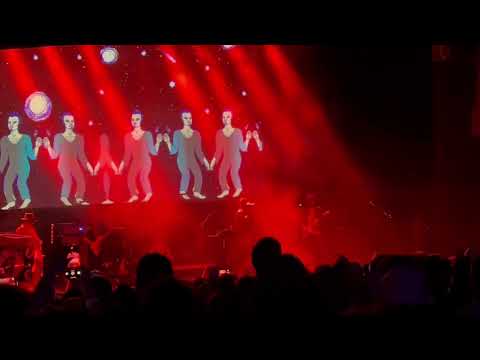
Last night at Perfume Genius who was, well… genius ❤️
And the beauty of the newly renovated Castro Theatre
#PerfumeGenius #CastroTheatre #OurLifeInConcerts