Today's #ChristmasWordfoolery is Hogmanay.
This particularly Scottish festival lasts from the 31st of December to the 2nd of January. The term may come from the Anglo-Saxon haleg monath (holy month) but others claim it’s from the Scandinavian term hoggo-nott (yule). #etymology 🧵
Today's #ChristmasWordfoolery is twixtmas.
You won’t find twixtmas formally accepted in traditional dictionaries, yet, but it is defined as the period between Christmas and New Year, typically the 27th to the 30th of December.
#etymology 🎄🧵
Today's word for #ChristmasWordfoolery is Boxing Day / St Stephen's Day.
Both relate to the 26th of December. Boxing Day is the more common term in Britain, while Saint Stephen’s Day is adhered to by most people living in Ireland.
#etymology #history 🧵🎄
The 2025 Wordfoolery Christmas card design - a watercolour and ink sketch of a gift with the information that gift dates to 1200s and comes from gipt in Old Norse
Happy Christmas!
#ChristmasWordfoolery Gift - 1200s, from gipt in Old Norse.
Today on #ChristmasWordfoolery it's Tipsy Eve and I blogged about it last year - wordfoolery.wordpress.com/2024/12/23/h.... Cheers!
Today's #ChristmasWordfoolery is solstice.
Solstice entered the English language in the mid 1200s via Old French from Latin’s solstitium - the point at which the sun seems to stand still. That was compounded from sol (sun) and the verb sistere (to stand still or take a stand). #etymology 🧵
Today's #ChristmasWordfoolery is carol.
Carol comes from Late Latin choraula (a choral song) and a Greek verb choraulein (to accompany a chorus on a reed instrument or flute).
#etymology #history 🧵🎄🎵
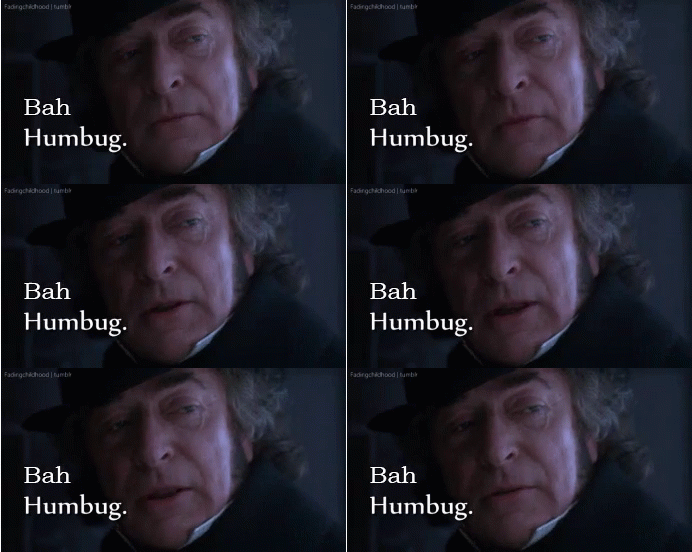
Today's #ChristmasWordfoolery is Scrooge because #onthisday (19th Dec) in 1843 Dickens published "A Christmas Carol". #etymology #history 🧵🎄📚
Today's #ChristmasWordfoolery is saturnalia because today (17th) is the first day of the festival.
Saturn was the Roman god of agriculture. We have him to thank for the word Saturday. The planet Saturn is named in honour of this god too but... 🧵🎄📚 #history
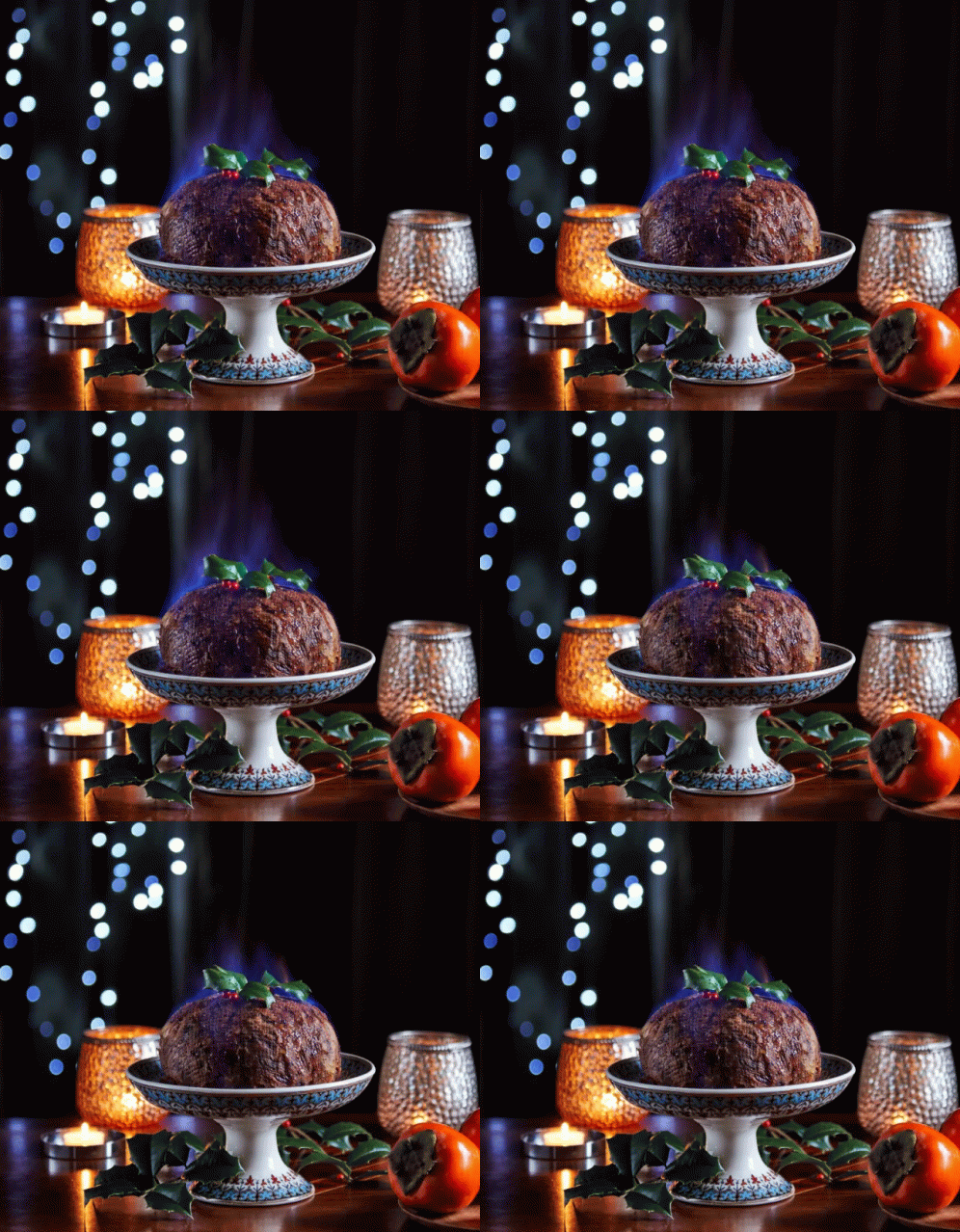
Today's #ChristmasWordfoolery is pudding.
The origins of Christmas pudding pre-dates the Victorians. The first puddings were medieval sausages made with fat, spices, dried fruits, meat, grains, and vegetables packed into animal intestines for preservation purposes. #ChristmasHistory 🧵🎄📚 #etymology
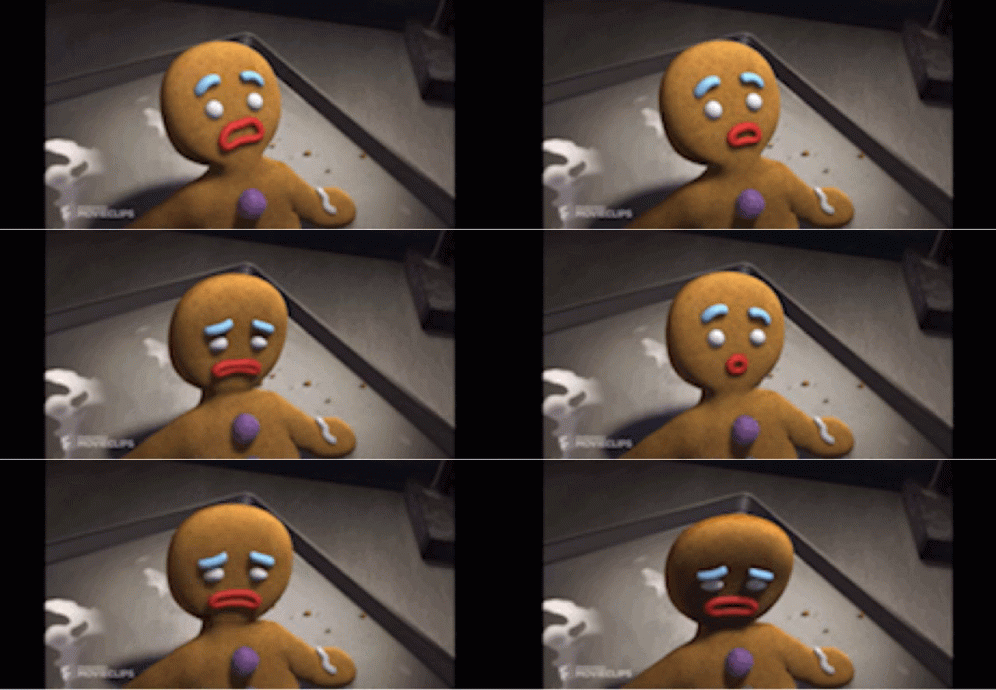
Today's #ChristmasWordfoolery is gingerbread.
Gingerbread entered the English language in the late 1200s, spelled as gingerbrar from Old French ginginbrat (ginger preserve) and Medieval Latin gingimbratus (gingered).
#etymology #ChristmasHistory 🧵🎄
Today's #ChristmasWordfoolery is St. Lucia Day. #etymology 🧵🎄📚🕯️#history #ChristmasTraditions
In Sweden one of the biggest celebrations is St Lucia’s Day on the December 13th (today). St Lucia was a young Christian girl who was martyred in 304.
Today's #ChristmasWordfoolery is The Yule Lads because in Iceland from the 12th of December (today), thirteen prank-loving troll-like characters come out to play. They are the Yule Lads (jólasveinarnir in Icelandic) and they visit children every night until Christmas Day. #etymology #folklore 🧵🎄📚
Happy shepherd and sheep figures from a wooden painted nativity scene
Today's #ChristmasWordfoolery is shepherd.
While an angelic choir and three magi are the most impressive visitors to the stable in Bethlehem, the shepherds were minding their flocks in the hills above the town. #etymology #carols #history 🧵🎄
Wordfoolery's 2025 cardmaking in progress - watercolour gift sketch with origin of the word underneath
Today's #ChristmasWordfoolery is cards.
Card, entered English in the 1400s via Old French carte (playing card) from Medieval Latin carta (card, paper, charter) and ultimately from Greek khartēs (papyrus). #etymology #history 🧵🎄
A little smiling wooden baby Jesus perched beside his bed in the crib (or creche if you're American). Not ready to go to bed until Christmas Eve, I guess.
Today's #ChristmasWordfoolery is crib or creche.
We have Saint Francis of Assisi to thank for Christmas nativity scenes. In 1223 he selected a cave near Greccio, lay a baby on hay, alongside oxen and a donkey. People in the town arrived with torches and candles and St Francis gave the sermon. 🧵📚🎄
Today's #ChristmasWordfoolery is The Day of the Little Candles.🧵🎄🕯️
The 7th of December is celebrated by Catholics around the world as the Feast of the Immaculate Conception, but it is particularly popular in Columbia where is is known as the Day of Little Candles or Día de las Velitas ...
Today's #ChristmasWordfoolery is Santa because today, the 6th of December is St Nicholas Day.
When a man has as many aliases as Santa Claus he’s usually a criminal, but Santa is definitely on the Nice List. Let’s look at some of his names. #etymology 🧵📚🎄🎅
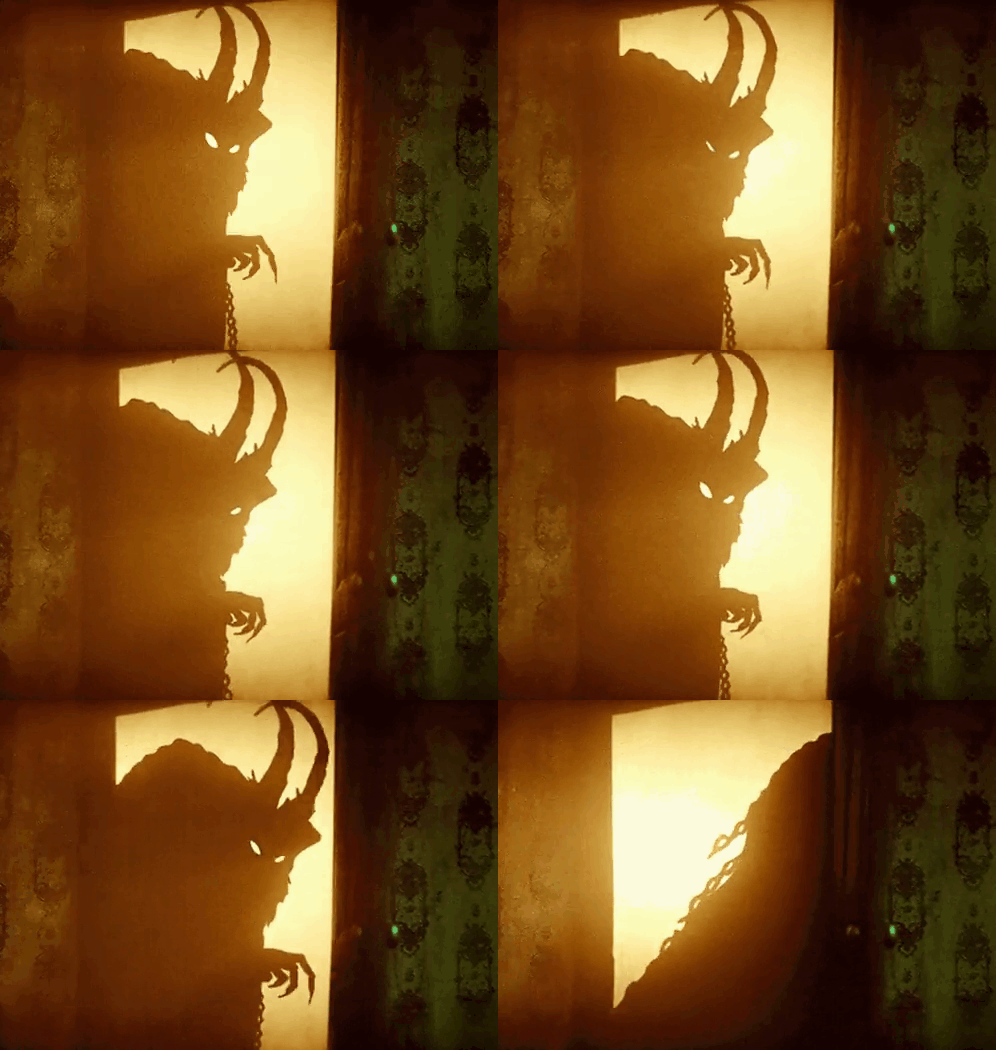
Today's #ChristmasWordfoolery is #Krampus because today, the 5th of December, is Krampus Night.
While St. Nicholas rewards good boys and girls, in Austria, a creature roams the streets. The Krampus captures the naughtiest children and whisks them away in his sack.
#etymology #folklore 🧵🎄💙📚
Today's #ChristmasWordfoolery is merry.
Merry is a delightful word with a long history. Middle English speakers spelled it mirie, and inherited it from myrge (pleasant, sweet, exciting feelings of gladness) in Old English. #etymology 🧵🎄📚
The Christmas Wreath at Wordfoolery HQ - woven from bare branches and scattered with red berries
Today's #ChristmasWordfoolery is wreath.
The first decoration up in my house every December is the wreath on the front door but the earliest wreaths weren’t Christian. They were symbols of victory and power in Greece and Rome. #etymology #history 🧵🎄💙📚
Today's #ChristmasWordfoolery is gift.
Gift became an English word in the mid 1200s for “that which is given”, from Old Norse gift (gift or good luck). Old English also had gift (from similar Proto-Germanic sources) but it was only used for dowries. #etymology #history 🧵🎄
Historic fiction author @thehistorybits.bsky.social kindly hosted me on her blog this week where I explored the history of gingerbread and the meanings behind the lyrics of "The Twelve Days of Christmas". 🎄📚 #ChristmasWordfoolery
Our family's advent calendar - can be filled with chocolate, games, or even a page a day story - features a friend snowdaddy and snowchild and 24 numbered pockets
This week's blog about the word history of Advent - wordfoolery.wordpress.com/2025/12/01/c.... I'll be sharing a Christmas #etymology daily in December. I mean, I did write an entire book on the subject - "Words Christmas Gave Us" #ChristmasWordfoolery 🎄📚💙