Advertisement ยท 728 ร— 90
#
Hashtag
#TaxonomyTuesday
Advertisement ยท 728 ร— 90
Post image

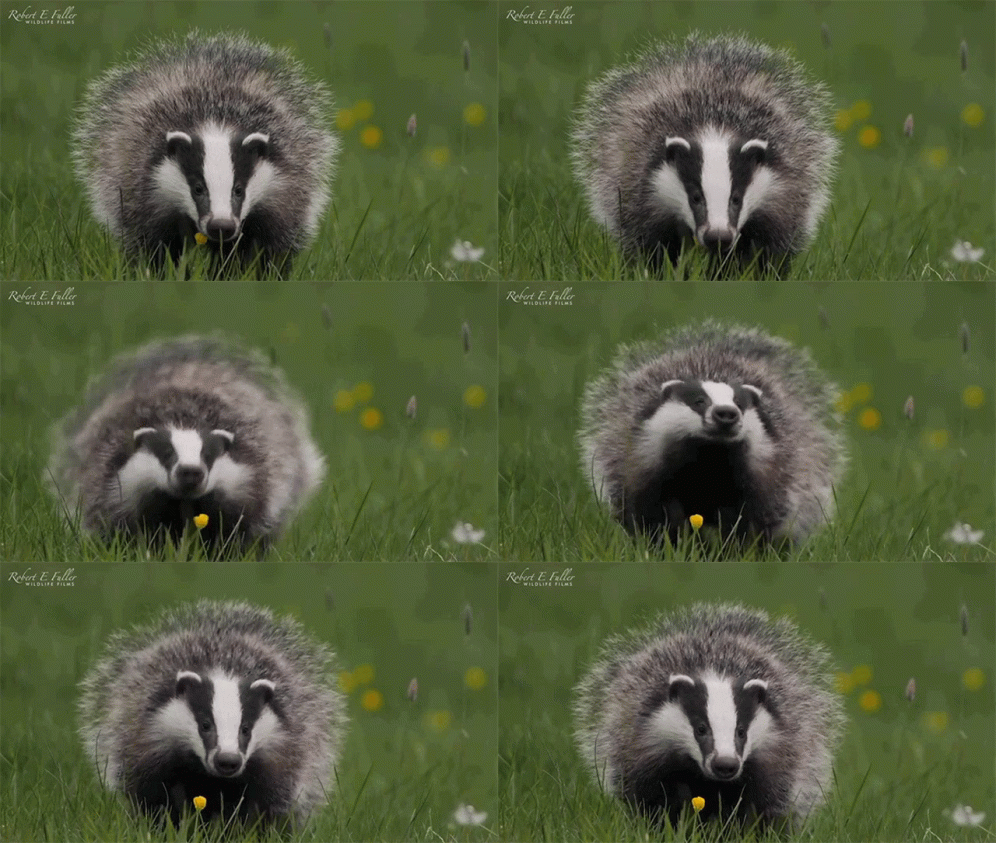
And we have a super #tautonym: ๐‘€๐‘’๐‘™๐‘’๐‘  ๐‘š๐‘’๐‘™๐‘’๐‘  ๐‘š๐‘’๐‘™๐‘’๐‘ , the nominate subspecies. It occupies much of western and central Europe and is noted for its relatively large size and dense fur, traits that help it thrive in cooler, temperate climates.
#TautonymTuesday #TaxonomyTuesday #Systematics Photo: Chris P.

3 1 0 1
Post image

๐‘€๐‘’๐‘™๐‘’๐‘  ๐‘š๐‘’๐‘™๐‘’๐‘  is famous for its complex burrows, or setts, which can be occupied by generations of #badgers over decades. Mostly nocturnal, it feeds on earthworms, insects, fruits, and small vertebrates, adjusting its diet seasonally.
#TautonymTuesday #TaxonomyTuesday #Systematics Photo: Carolyn Legg

3 1 1 0
Preview
a badger is standing in a field with robert e. fuller wildlife films written on the bottom ALT: a badger is standing in a field with robert e. fuller wildlife films written on the bottom

Itโ€™s #TautonymTuesday! Meet ๐‘€๐‘’๐‘™๐‘’๐‘  ๐‘š๐‘’๐‘™๐‘’๐‘ , the European #badger. This powerful mustelid ranges across much of Europe and W Asia, With a bold blackโ€‘andโ€‘white facial stripes and stocky build, it's a strong digger and adaptable omnivore living in woodlands and farmlands.
#TaxonomyTuesday #Systematics

5 0 1 1
Post image

A high number of endemic species may have gone extinct silently in the Brazilian savannah, a biodiversity hotspot, as researchers are not able to describe them as fast as their natural habitats are being destroyed.

Read the study by Oliviera et al. (2014) here: buff.ly/t85ORGU

#TaxonomyTuesday

4 0 0 0
Post image

#TaxonomyTuesday

Gorgeous ๐˜ผ๐™™๐™–๐™ก๐™–๐™ง๐™ž๐™– ๐™ฅ๐™ง๐™ค๐™ญ๐™ž๐™ข๐™– sea slugs by Ekimova et al. (2025) ... and the new cover image for Vol. 24 ๐Ÿ›

Read the full study here: buff.ly/kyw3xTc

6 2 0 0
Post image

#TaxonomyTuesday

Lateral and dorsal views of ๐™‹๐™ก๐™–๐™œ๐™ž๐™ค๐™™๐™ค๐™ฃ๐™ฉ๐™ž๐™– ๐™–๐™š๐™™๐™ž๐™ช๐™ข skulls

This Hispaniolan hutia, is an endangered arboreal rodent endemic to the Caribbean island of Hispaniola.

Read the full study by Hansford ๐˜ฆ๐˜ต ๐˜ข๐˜ญ. 2012 here: buff.ly/pMEY80j

6 2 0 0
Giant Frogs!

Giant Frogs!

#TaxonomyTuesday

Lyakurwa et al. (2025) and the amphibians of Tanzaniaโ€™s Ukaguru Mountainsโ€”featuring a description of a new giant species of ๐˜ผ๐™ง๐™ฉ๐™๐™ง๐™ค๐™ก๐™š๐™ฅ๐™ฉ๐™ž๐™จ (Amphibia: Anura).

Read the full study: buff.ly/VtX70fU #GiantFrogs #Biodiversity #Herpetology #Taxonomy

2 0 0 0
Post image

๐‘†. ๐‘ ๐‘ก๐‘’๐‘™๐‘™๐‘–๐‘“๐‘’๐‘Ÿ reaches about 12โ€“18 cm, with a slender, silvery body and a noticeable mental barbel under the chin. Like other croakers, it produces sound using specialized sonic muscles and the swim bladder to communicate in turbid estuarine waters.
#TautonymTuesday #TaxonomyTuesday #Systematics

2 0 1 0
Post image

#TautonymTuesday is back! Meet ๐‘†๐‘ก๐‘’๐‘™๐‘™๐‘–๐‘“๐‘’๐‘Ÿ ๐‘ ๐‘ก๐‘’๐‘™๐‘™๐‘–๐‘“๐‘’๐‘Ÿ, the little croaker, a small sciaenid fish found along the Atlantic coasts of S America. It inhabits shallow coastal waters and estuaries, where it schools in softโ€‘bottom habitats rich in invertebrate prey.
#TaxonomyTuesday #Systematics

5 0 1 0
Post image

How did bumblebees end up where they are today?
Did they fly from Asia to South America 15โ€“17โ€ฏmillion years agoโ€” before the Northโ€“South American land bridge formed, despite being poor at longโ€‘distance dispersion (especially over water).

Read more here: buff.ly/4aj2kaH #TaxonomyTuesday

6 1 0 1
Post image Post image

This week, weโ€™re celebrating some of the true romantics of the natural world:

First, the serenades of the cicadas of Spain ๐ŸŽถ
Puissant & Sueur (2010) identified four brandโ€‘new genera and species, each with a distinctive mating call, a unique song to find love ๐Ÿ’˜ buff.ly/LwUrREv
#TaxonomyTuesday

2 1 0 0
Post image

#TaxonomyTuesday

Revision of ๐˜–๐˜ฅ๐˜ฐ๐˜ฏ๐˜ต๐˜ฆ๐˜ญ๐˜ญ๐˜ข ๐˜ญ๐˜ช๐˜ต๐˜ช๐˜จ๐˜ช๐˜ฐ๐˜ด๐˜ข (Bacillariophyta): life-cycle and taxonomy by Williams ๐˜ฆ๐˜ต ๐˜ข๐˜ญ. (2025).

๐˜–๐˜ฅ๐˜ฐ๐˜ฏ๐˜ต๐˜ฆ๐˜ญ๐˜ญ๐˜ข ๐˜ญ๐˜ช๐˜ต๐˜ช๐˜จ๐˜ช๐˜ฐ๐˜ด๐˜ข is a highly polymorphic species with three โ€œphenotypesโ€ (or โ€œphasesโ€).

Read the full study here: buff.ly/CDOuhGs

#Systematics #Biodiversity #NHM

3 1 0 0
Post image

#TaxonomyTuesday ๐Ÿœ

In an attempt to fill some of the gaps in knowledge in terms of species distribution data and sampling coverage , Feitosa ๐˜ฆ๐˜ต ๐˜ข๐˜ญ. (2022) used a scientometric approach to investigate the ants of Brazil: an overview based on 50 years of diversity studies.
Read here: buff.ly/uvbCoQ4

4 1 0 0
Post image

Itโ€™s #TautonymTuesday! Meet ๐ถโ„Ž๐‘–๐‘›๐‘โ„Ž๐‘–๐‘™๐‘™๐‘Ž ๐‘โ„Ž๐‘–๐‘›๐‘โ„Ž๐‘–๐‘™๐‘™๐‘Ž, the short-tailed #chinchilla. Native to the high #Andes , this species is built for cold mountainsโ€”with the densest of any land mammal, compact bodies, and strong hind legs for navigating rocky slopes.
#TaxonomyTuesday #Systematics Photo: Britannica

7 1 1 0
Post image

Achatz ๐˜ฆ๐˜ต ๐˜ข๐˜ญ. (2025) report the phylogeny and systematics of diplostomids (Digenea: Diplostomidae) from passeriform and cuculiform birds in South America.

Read here: buff.ly/GBLlSOl #Parasite #Biodiversity #TaxonomyTuesday

3 1 0 0
Post image

This viper's #venom is highly potent, selected to immobilize prey quickly in harsh environments where energy #conservation is critical. Despite its fearsome reputation, bites to humans are rare due to its secretive lifestyle.
#TautonymTuesday #TaxonomyTuesday #Systematics Photo: Philip Kahn

3 0 0 0
Post image

๐ถ๐‘’๐‘Ÿ๐‘Ž๐‘ ๐‘ก๐‘’๐‘  ๐‘๐‘’๐‘Ÿ๐‘Ž๐‘ ๐‘ก๐‘’๐‘  is perfectly adapted to #desert life. It uses sidewinding locomotion to move efficiently across scorching sand, reducing heat exposure. Its cryptic coloration allows it to ambush prey like #rodents and #lizards.
#TautonymTuesday #TaxonomyTuesday #Systematics Photo: Intesar Salih

2 0 1 0
Post image

Itโ€™s #TautonymTuesday! ๐ถ๐‘’๐‘Ÿ๐‘Ž๐‘ ๐‘ก๐‘’๐‘  ๐‘๐‘’๐‘Ÿ๐‘Ž๐‘ ๐‘ก๐‘’๐‘ , the Saharan horned #viper, thrives in N African deserts, where its horn-like scales help break up its outline against the sand. It can bury itself, exposing only its eyesโ€”perfect for ambushing prey.
#TaxonomyTuesday #Systematics Photo: Holger Krisp

8 1 1 0
Post image

Biodiversity loss is systematic and predictable.

The Goldilocks Hypothesis suggests that extinction risk is lowest in midโ€‘sized species sitting in a โ€œGoldilocks zoneโ€ of lower risk.
Read about traitโ€‘based selectivity patterns: buff.ly/JrzQYaY

#TaxonomyTuesday #extinction #GoldilocksHypothesis

7 4 0 0
Post image

After a week away, weโ€™re back with #TautonymTuesday! Meet ๐บ๐‘™๐‘–๐‘  ๐‘”๐‘™๐‘–๐‘ , the edible #dormouse. Native to Europe & W Asia, this nocturnal #rodent is famous for its long hibernationโ€”up to 7 months! Itโ€™s also the largest dormouse species, reaching up to 30 cm long.
#TaxonomyTuesday #Systematics Photo: Azay

8 1 1 0
Post image

Camps-Castellร€ ๐˜ฆ๐˜ต ๐˜ข๐˜ญ. investigate the biodiversity of eastern Pacific octocorals

Revisiting Chilean gorgonians (Cnidaria: Octocorallia: Gorgoniidae): taxonomic clarification and molecular phylogeny of ๐™‡๐™š๐™ฅ๐™ฉ๐™ค๐™œ๐™ค๐™ง๐™œ๐™ž๐™– ๐™˜๐™๐™ž๐™ก๐™š๐™ฃ๐™จ๐™ž๐™จ and ๐™‹๐™๐™ฎ๐™˜๐™ค๐™œ๐™ค๐™ง๐™œ๐™ž๐™– ๐™›๐™ช๐™˜๐™–๐™ฉ๐™– ๐Ÿชธ

Read here: buff.ly/7oJolr1 #TaxonomyTuesday

4 0 0 0
Post image

Research on the flat lizard ๐™๐™ง๐™ค๐™ฅ๐™ž๐™™๐™ช๐™ง๐™ช๐™จ ๐™จ๐™š๐™ข๐™ž๐™ฉ๐™–๐™š๐™ฃ๐™ž๐™–๐™ฉ๐™ช๐™จ shows that many lineages are quietly diverging in isolated pockets of Brazilโ€™s semiโ€‘arid biome.
Ferreira ๐˜ฆ๐˜ต ๐˜ข๐˜ญ. (2025) show that microendemism isnโ€™t the exception in the Caatingaโ€”it may be the rule. #Biodiversity #Systematics #TaxonomyTuesday

6 1 0 0
Post image

New study out in JSP!

Vento ๐˜ฆ๐˜ต ๐˜ข๐˜ญ. report the integrative phylogeny of extinct and extant Andean subgenus ๐™‰๐™ค๐™ฉ๐™๐™ค๐™›๐™–๐™œ๐™ช๐™จ (str.) trees ๐Ÿƒ

Results highlight the importance of leaf morphology when analysing extinct and extant species together: buff.ly/QhNWFTS
#PaleoSky #PaleoBotany #TaxonomyTuesday

11 2 0 0
Post image

Did you know ๐‘ƒ๐‘’๐‘ก๐‘Ÿ๐‘œ๐‘›๐‘–๐‘Ž ๐‘๐‘’๐‘ก๐‘Ÿ๐‘œ๐‘›๐‘–๐‘Žย ๐‘๐‘’๐‘ก๐‘Ÿ๐‘œ๐‘›๐‘–๐‘Ž is a ๐’๐”๐๐„๐‘ ๐“๐€๐”๐“๐Ž๐๐˜๐Œ?
The nominate subspecies ranges from Madeira and the Canary Islands across southern Europe to western Turkey.
#TautonymTuesday #TaxonomyTuesday #Systematics Photo: MPF

2 0 0 0
Post image

๐‘ƒ๐‘’๐‘ก๐‘Ÿ๐‘œ๐‘›๐‘–๐‘Ž ๐‘๐‘’๐‘ก๐‘Ÿ๐‘œ๐‘›๐‘–๐‘Žย ๐‘๐‘’๐‘ก๐‘Ÿ๐‘œ๐‘›๐‘–๐‘Ž is a streaked brown #sparrow with a distinctive yellow throat patch, most visible in adults. These social granivores forage on seeds and insects, nesting in crevices and rocky slopesโ€”perfectly adapted to rugged habitats.
#TautonymTuesday #TaxonomyTuesday #Systematics

1 0 1 0
Post image

Itโ€™s #TautonymTuesday! Meet ๐‘ƒ๐‘’๐‘ก๐‘Ÿ๐‘œ๐‘›๐‘–๐‘Ž ๐‘๐‘’๐‘ก๐‘Ÿ๐‘œ๐‘›๐‘–๐‘Ž, the rock #sparrow. This hardy passerine is native to southern Europe, North Africa, and parts of Asia, often found in rocky hillsides and open scrub. Sparrow in a rock >> Partridge in a pear tree!
#TaxonomyTuesday #Systematics #bird Photo: Zeynel Cebeci

23 5 1 0
Post image

New study!
Camps-Castellร€ ๐˜ฆ๐˜ต ๐˜ข๐˜ญ. investigate the biodiversity of Pacific octocorals ๐Ÿชธ
Revisiting Chilean gorgonians (Cnidaria: Octocorallia: Gorgoniidae): taxonomic clarification and molecular phylogeny of ๐™‡๐™š๐™ฅ๐™ฉ๐™ค๐™œ๐™ค๐™ง๐™œ๐™ž๐™– ๐™˜๐™๐™ž๐™ก๐™š๐™ฃ๐™จ๐™ž๐™จ and ๐™‹๐™๐™ฎ๐™˜๐™ค๐™œ๐™ค๐™ง๐™œ๐™ž๐™– ๐™›๐™ช๐™˜๐™–๐™ฉ๐™–

Read here: buff.ly/khMhI2j

#TaxonomyTuesday

3 1 0 0
Post image

๐‘€๐‘Ž๐‘๐‘Ÿ๐‘œ๐‘โ„Ž๐‘ฆ๐‘™๐‘™๐‘ข๐‘š ๐‘š๐‘Ž๐‘๐‘Ÿ๐‘œ๐‘โ„Ž๐‘ฆ๐‘™๐‘™๐‘ข๐‘š ranges from southern #Mexico through Central America into northern South America. Its genus name, meaning โ€œlarge leaf,โ€ highlights its defining facial featureโ€”a key adaptation for sonar-based foraging in #bats.
#TautonymTuesday #TaxonomyTuesday #Systematics Map: Cephas

0 0 0 0
Post image

Itโ€™s #TautonymTuesday! Meet ๐‘€๐‘Ž๐‘๐‘Ÿ๐‘œ๐‘โ„Ž๐‘ฆ๐‘™๐‘™๐‘ข๐‘š ๐‘š๐‘Ž๐‘๐‘Ÿ๐‘œ๐‘โ„Ž๐‘ฆ๐‘™๐‘™๐‘ข๐‘š, the long-legged #bat. Native to Central and South America, this species is named for its distinctive large nose leaf and elongated limbsโ€”perfect for its unique #hunting style.
#TaxonomyTuesday #Systematics Photo: Pedro Aguilar

5 2 1 0
Post image

Todayโ€™s feature for #TautonymTuesday is ๐ถ๐‘Ÿ๐‘’๐‘›๐‘–๐‘‘๐‘’๐‘›๐‘  ๐‘๐‘Ÿ๐‘’๐‘›๐‘–๐‘‘๐‘’๐‘›๐‘ , the karanteen #seabream, a sparid fish found in coastal waters of the W Indian Ocean. Known for its compressed body and strong jaws, it lives in reef and nearshore ecosystems. #TaxonomyTuesday #Systematics Photo: Hamid Badar Osmany

192 15 3 2