Advertisement Β· 728 Γ— 90
#
Hashtag
#TautonymTuesday
Advertisement Β· 728 Γ— 90
Post image

And we have a super #tautonym: 𝑀𝑒𝑙𝑒𝑠 π‘šπ‘’π‘™π‘’π‘  π‘šπ‘’π‘™π‘’π‘ , the nominate subspecies. It occupies much of western and central Europe and is noted for its relatively large size and dense fur, traits that help it thrive in cooler, temperate climates.
#TautonymTuesday #TaxonomyTuesday #Systematics Photo: Chris P.

3 1 0 1
Post image

𝑀𝑒𝑙𝑒𝑠 π‘šπ‘’π‘™π‘’π‘  is famous for its complex burrows, or setts, which can be occupied by generations of #badgers over decades. Mostly nocturnal, it feeds on earthworms, insects, fruits, and small vertebrates, adjusting its diet seasonally.
#TautonymTuesday #TaxonomyTuesday #Systematics Photo: Carolyn Legg

3 1 1 0
Preview
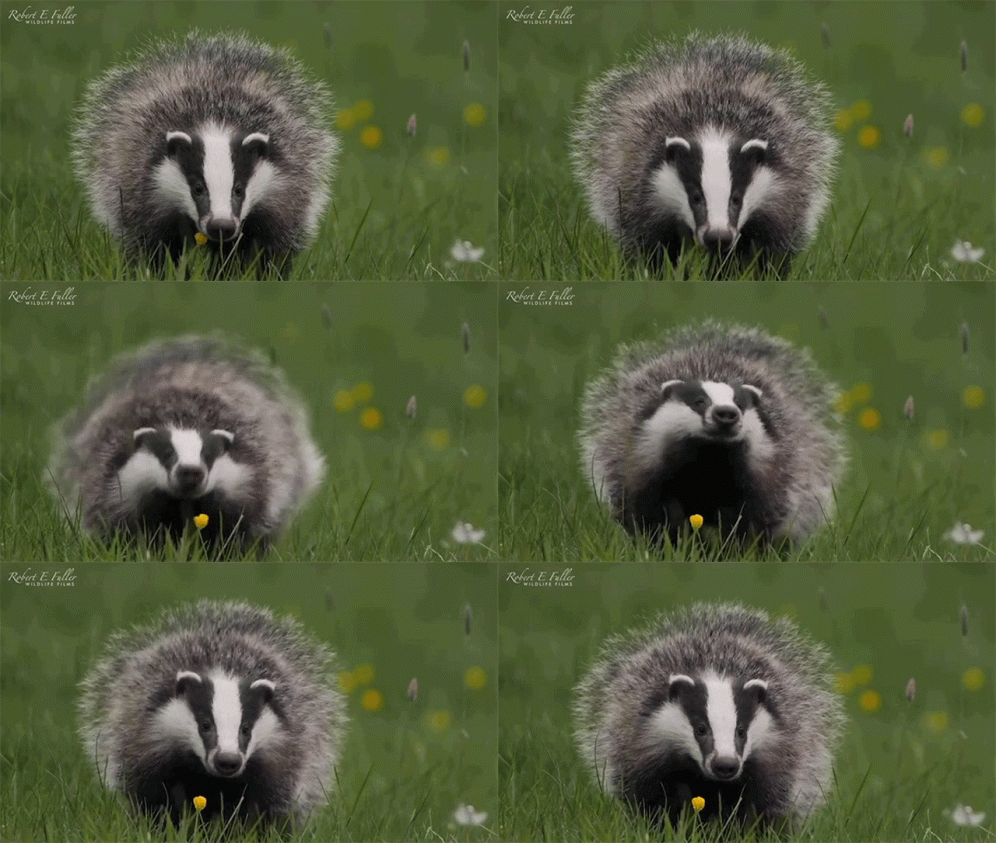
a badger is standing in a field with robert e. fuller wildlife films written on the bottom ALT: a badger is standing in a field with robert e. fuller wildlife films written on the bottom

It’s #TautonymTuesday! Meet 𝑀𝑒𝑙𝑒𝑠 π‘šπ‘’π‘™π‘’π‘ , the European #badger. This powerful mustelid ranges across much of Europe and W Asia, With a bold black‑and‑white facial stripes and stocky build, it's a strong digger and adaptable omnivore living in woodlands and farmlands.
#TaxonomyTuesday #Systematics

5 0 1 1

Men det er jo ikke fΓΈr i morra det er #TautonymTuesday!

2 0 2 0
Post image

This species ranges from the Caribbean through N Brazil, favoring bays, river mouths, and muddy or sandy bottoms. As a benthic feeder on small crustaceans and worms, it plays a key role in energy transfer between invertebrate communities and larger predatory fishes.
#TautonymTuesday #Systematics

3 0 0 0
Post image

𝑆. π‘ π‘‘π‘’π‘™π‘™π‘–π‘“π‘’π‘Ÿ reaches about 12–18 cm, with a slender, silvery body and a noticeable mental barbel under the chin. Like other croakers, it produces sound using specialized sonic muscles and the swim bladder to communicate in turbid estuarine waters.
#TautonymTuesday #TaxonomyTuesday #Systematics

2 0 1 0
Post image

#TautonymTuesday is back! Meet π‘†π‘‘π‘’π‘™π‘™π‘–π‘“π‘’π‘Ÿ π‘ π‘‘π‘’π‘™π‘™π‘–π‘“π‘’π‘Ÿ, the little croaker, a small sciaenid fish found along the Atlantic coasts of S America. It inhabits shallow coastal waters and estuaries, where it schools in soft‑bottom habitats rich in invertebrate prey.
#TaxonomyTuesday #Systematics

5 0 1 0
Post image

Once named πΆβ„Žπ‘–π‘›π‘β„Žπ‘–π‘™π‘™π‘Ž π‘π‘Ÿπ‘’π‘£π‘–π‘π‘Žπ‘’π‘‘π‘Žπ‘‘π‘Ž, 𝐢. π‘β„Žπ‘–π‘›π‘β„Žπ‘–π‘™π‘™π‘Ž is Critically Endangered after severe overhunting & habitat loss. Small wild colonies survive in remote Andean rocky slopes, where they remain important herbivores in fragile alpine ecosystems.
#TautonymTuesday #Systematics Photo: Animalia.bio

2 0 0 0
Post image

𝐢. π‘β„Žπ‘–π‘›π‘β„Žπ‘–π‘™π‘™π‘Ž is stockier with a shorter tail & thicker neck compared to its long-tailed cousin. These social #rodents live in colonies & communicate with a range of chirps & barks. Their ultra-dense fur requires special dust baths to stay clean.
#TautonymTuesday #Systematics Photo: masaigallery

2 0 1 0
Post image

It’s #TautonymTuesday! Meet πΆβ„Žπ‘–π‘›π‘β„Žπ‘–π‘™π‘™π‘Ž π‘β„Žπ‘–π‘›π‘β„Žπ‘–π‘™π‘™π‘Ž, the short-tailed #chinchilla. Native to the high #Andes , this species is built for cold mountainsβ€”with the densest of any land mammal, compact bodies, and strong hind legs for navigating rocky slopes.
#TaxonomyTuesday #Systematics Photo: Britannica

7 1 1 0
Post image

This viper's #venom is highly potent, selected to immobilize prey quickly in harsh environments where energy #conservation is critical. Despite its fearsome reputation, bites to humans are rare due to its secretive lifestyle.
#TautonymTuesday #TaxonomyTuesday #Systematics Photo: Philip Kahn

3 0 0 0
Post image

πΆπ‘’π‘Ÿπ‘Žπ‘ π‘‘π‘’π‘  π‘π‘’π‘Ÿπ‘Žπ‘ π‘‘π‘’π‘  is perfectly adapted to #desert life. It uses sidewinding locomotion to move efficiently across scorching sand, reducing heat exposure. Its cryptic coloration allows it to ambush prey like #rodents and #lizards.
#TautonymTuesday #TaxonomyTuesday #Systematics Photo: Intesar Salih

2 0 1 0
Post image

It’s #TautonymTuesday! πΆπ‘’π‘Ÿπ‘Žπ‘ π‘‘π‘’π‘  π‘π‘’π‘Ÿπ‘Žπ‘ π‘‘π‘’π‘ , the Saharan horned #viper, thrives in N African deserts, where its horn-like scales help break up its outline against the sand. It can bury itself, exposing only its eyesβ€”perfect for ambushing prey.
#TaxonomyTuesday #Systematics Photo: Holger Krisp

8 1 1 0
Post image

And 𝐺𝑙𝑖𝑠 𝑔𝑙𝑖𝑠 has a 𝐒𝐔𝐏𝐄𝐑 π“π€π”π“πŽππ˜πŒ!
𝐺𝑙𝑖𝑠 𝑔𝑙𝑖𝑠 𝑔𝑙𝑖𝑠 is the nominate subspecies, found from the Madeira and Canary Islands across southern Europe to western Turkey. It can live over 9 years in the wild, an unusually long lifespan for a small #rodent!
#TautonymTuesday #Systematics Photo: Youbadou

4 0 0 0
Post image

𝐺𝑙𝑖𝑠 𝑔𝑙𝑖𝑠 is a chunky #dormouse with gray fur, large eyes, and a bushy tail. It’s an agile climber, feeding on nuts, fruits, and occasionally #insects. True to its name, it was once considered a delicacy in ancient #Rome, hence β€œedible dormouse”!
#TautonymTuesday #Systematics Photo: Pasztilla

4 0 1 0
Post image

After a week away, we’re back with #TautonymTuesday! Meet 𝐺𝑙𝑖𝑠 𝑔𝑙𝑖𝑠, the edible #dormouse. Native to Europe & W Asia, this nocturnal #rodent is famous for its long hibernationβ€”up to 7 months! It’s also the largest dormouse species, reaching up to 30 cm long.
#TaxonomyTuesday #Systematics Photo: Azay

8 1 1 0
Post image

Did you know π‘ƒπ‘’π‘‘π‘Ÿπ‘œπ‘›π‘–π‘Ž π‘π‘’π‘‘π‘Ÿπ‘œπ‘›π‘–π‘ŽΒ π‘π‘’π‘‘π‘Ÿπ‘œπ‘›π‘–π‘Ž is a 𝐒𝐔𝐏𝐄𝐑 π“π€π”π“πŽππ˜πŒ?
The nominate subspecies ranges from Madeira and the Canary Islands across southern Europe to western Turkey.
#TautonymTuesday #TaxonomyTuesday #Systematics Photo: MPF

2 0 0 0
Post image

π‘ƒπ‘’π‘‘π‘Ÿπ‘œπ‘›π‘–π‘Ž π‘π‘’π‘‘π‘Ÿπ‘œπ‘›π‘–π‘ŽΒ π‘π‘’π‘‘π‘Ÿπ‘œπ‘›π‘–π‘Ž is a streaked brown #sparrow with a distinctive yellow throat patch, most visible in adults. These social granivores forage on seeds and insects, nesting in crevices and rocky slopesβ€”perfectly adapted to rugged habitats.
#TautonymTuesday #TaxonomyTuesday #Systematics

1 0 1 0
Post image

It’s #TautonymTuesday! Meet π‘ƒπ‘’π‘‘π‘Ÿπ‘œπ‘›π‘–π‘Ž π‘π‘’π‘‘π‘Ÿπ‘œπ‘›π‘–π‘Ž, the rock #sparrow. This hardy passerine is native to southern Europe, North Africa, and parts of Asia, often found in rocky hillsides and open scrub. Sparrow in a rock >> Partridge in a pear tree!
#TaxonomyTuesday #Systematics #bird Photo: Zeynel Cebeci

23 5 1 0
Post image

π‘€π‘Žπ‘π‘Ÿπ‘œπ‘β„Žπ‘¦π‘™π‘™π‘’π‘š π‘šπ‘Žπ‘π‘Ÿπ‘œπ‘β„Žπ‘¦π‘™π‘™π‘’π‘š ranges from southern #Mexico through Central America into northern South America. Its genus name, meaning β€œlarge leaf,” highlights its defining facial featureβ€”a key adaptation for sonar-based foraging in #bats.
#TautonymTuesday #TaxonomyTuesday #Systematics Map: Cephas

0 0 0 0
Post image

π‘€π‘Žπ‘π‘Ÿπ‘œπ‘β„Žπ‘¦π‘™π‘™π‘’π‘š π‘šπ‘Žπ‘π‘Ÿπ‘œπ‘β„Žπ‘¦π‘™π‘™π‘’π‘š sports a prominent nose leaf for #echolocation and unusually long legs and tail membrane. Unlike most #bats, it skims #insects from water surfaces using its legs and tailβ€”aerial agility meets precision hunting!
#TautonymTuesday #Systematics Photo: Wied, Maximilian

1 0 1 0
Post image

It’s #TautonymTuesday! Meet π‘€π‘Žπ‘π‘Ÿπ‘œπ‘β„Žπ‘¦π‘™π‘™π‘’π‘š π‘šπ‘Žπ‘π‘Ÿπ‘œπ‘β„Žπ‘¦π‘™π‘™π‘’π‘š, the long-legged #bat. Native to Central and South America, this species is named for its distinctive large nose leaf and elongated limbsβ€”perfect for its unique #hunting style.
#TaxonomyTuesday #Systematics Photo: Pedro Aguilar

5 2 1 0

And here’s the 𝐒𝐔𝐏𝐄𝐑 π“π€π”π“πŽππ˜πŒ: πΆπ‘Ÿπ‘’π‘›π‘–π‘‘π‘’π‘›π‘  π‘π‘Ÿπ‘’π‘›π‘–π‘‘π‘’π‘›π‘  π‘π‘Ÿπ‘’π‘›π‘–π‘‘π‘’π‘›π‘ ! This nominate subspecies occurs in the Red Sea and south along the eastern African coast. Adapted to warm, shallow waters, it’s a key grazer in coral reef habitats. #TautonymTuesday #Systematics

3 0 0 0
Post image

πΆπ‘Ÿπ‘’π‘›π‘–π‘‘π‘’π‘›π‘  π‘π‘Ÿπ‘’π‘›π‘–π‘‘π‘’π‘›π‘  has an oval body, small mouth with incisiform #teeth, and silvery coloration with faint vertical bars. It feeds on #algae and small #invertebrates, contributing to benthic community dynamics. #TautonymTuesday #Systematics Photo: Hamid Badar Osmany

4 0 1 0
Post image

Today’s feature for #TautonymTuesday is πΆπ‘Ÿπ‘’π‘›π‘–π‘‘π‘’π‘›π‘  π‘π‘Ÿπ‘’π‘›π‘–π‘‘π‘’π‘›π‘ , the karanteen #seabream, a sparid fish found in coastal waters of the W Indian Ocean. Known for its compressed body and strong jaws, it lives in reef and nearshore ecosystems. #TaxonomyTuesday #Systematics Photo: Hamid Badar Osmany

192 15 3 2
Post image

And it’s another 𝐒𝐔𝐏𝐄𝐑 π“π€π”π“πŽππ˜πŒ: πΆπ‘Žπ‘π‘Ÿπ‘’π‘œπ‘™π‘’π‘  π‘π‘Žπ‘π‘Ÿπ‘’π‘œπ‘™π‘’π‘  π‘π‘Žπ‘π‘Ÿπ‘’π‘œπ‘™π‘’π‘ , the Alpine roe deer! Found in Austria, France, Germany, Italy, Switzerland, Slovenia, Slovakia, and even introduced to New Zealand. Adapted to rugged terrain and seasonal extremes. #TautonymTuesday #Systematics Photo: Bouke ten Cate

3 0 0 1
Post image

Roe deer are small, slender cervids with short #antlers in males, reddish-brown summer coats, and grayish winter fur. They’re selective browsers, feeding on herbs, shoots, and leavesβ€”key players in shaping plant communities. #TautonymTuesday #Systematics Photo: Romzig

4 0 1 0
Post image

For #TautonymTuesday this week, we celebrate Europe’s most widespread #deer! πΆπ‘Žπ‘π‘Ÿπ‘’π‘œπ‘™π‘’π‘  π‘π‘Žπ‘π‘Ÿπ‘’π‘œπ‘™π‘’π‘ , the roe deer, ranges from the Atlantic to western Asia. Agile and adaptable, it thrives in forests, farmland, and even urban edges. #TaxonomyTuesday #Systematics Photo: ClΓ©ment Bardot

9 3 1 0

Γ…h, sΓ₯ kult!
Men det er ikke #TautonymTuesday ennΓ₯, sΓ₯ den fΓ₯r vΓ¦rsΓ₯god henge rundt til over hΓ¦lja.

0 0 1 0

Do check out @tedstankowich.bsky.social 's lovely #TautonymTuesday hashtag bsky.app/profile/teds...

4 1 0 0