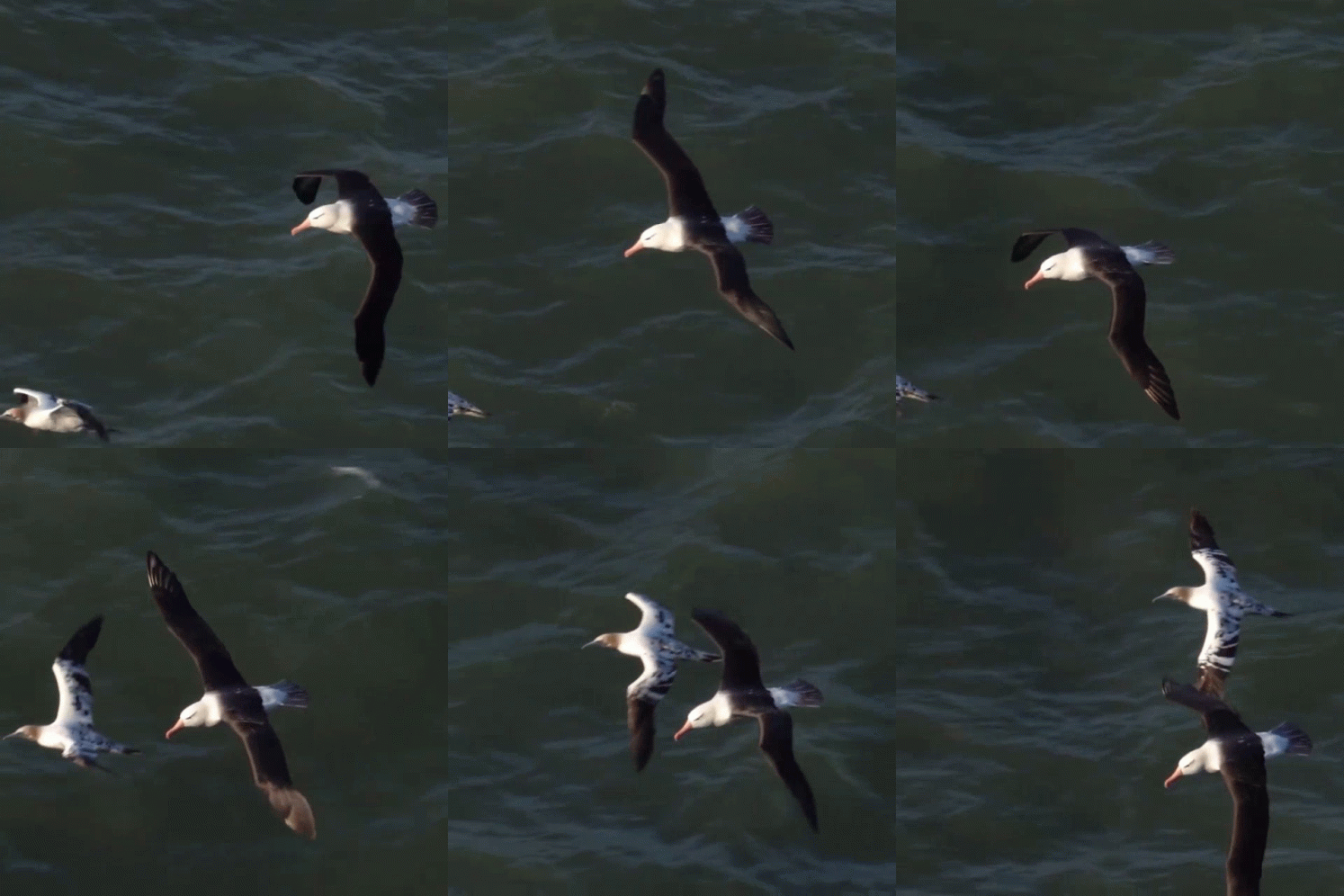
Excited to start my internship at the Concarneau #marinestation working on #citizenscience & #bird seawatching ! 🪶🌊 feels like a dream come true, I just have such a good feeling about the months ahead!
Huge thanks to my RAINET pals & supervisors for the moments we shared. Wishing you all the best💚
Posts by Imane Romangin
Hey ! Thank you for the proposal !
I’d be delighted :)
10/10 : Kudos to the authors @tammyedavies.bsky.social & al.) for this reflection on 20 years of collaborative effort. And thanks to all the collaborators making the STDB alive! Their work shows how #sharedscience leads to concrete conservation impacts🌍
9/10 What now❓
Key #challenges for the STDB include data overlapping, coverage gaps, interoperability & #cybercrime. The solutions: invest in standardized data format📒, encourage data submission, foster data collection in underrepresented regions🌏, and ensure cybersecurity🛡️
8/10 🖥️Mat&Mets 🧪
This #metaanalysis compiled/standardized tracking data & researched peer-reviewed papers facilitated by the STDB📋 The authors analyzed the data to deduce trends in tracks, count papers that emerged from the STDB & assess #conservationimpact📊
7/10 The STDB supported the creation of #MarineProtectedAreas🐠🪸 such as the North Atlantic Current & Evlanov Seabasin. It helped inform regional fisheries management organizations - #RFMOs on mitigating threats 🎣 & implementing regulatory policies under the #ConventiononBiologicalDiversity
6/10 The #STDB has contributed to scientific effort on fundamental and conservation issues! At least 92 #peerreviewed papers emerged from it, addressing current and emerging threats to seabirds. It helped identify spatial coverage gaps such as the North Pacific. But there’s more...👀
5/10 : Over time, the database expanded to include data on 168 seabird species, becoming a reference by 2014 and the largest #database on seabird tracking today💻 Regular upgrades and #collaborative effort led to the holding of 39 million location records, and over 54k tracks!📈
4/10 : Now a look into history🔎📊
@BirdLife launched the Seabird Tracking Database in 2004 after 2 yrs of collaborative effort to create a GIS database for seabird tracking data. The goal? To analyze it and suggest relevant #conservation measures. See how it works👇
3/10 : Tracking #seabird movements has long been key to informing their ecology/conservation🐧 With #satellitetracking starting in the 80s, devices have improved until today, allowing to track more species, to know more about their ecology & to enlighten marine conservation needs🛰️
2/10 : Context first 🪶 Seabirds are #sentinelspecies & indicators of ocean health. Yet, 30% of the 365 existing species are globally threatened (#IUCNRedlist)🌊 Threats include bycatch⛴️🎣, energy production, climate change🌪️, offshore windfarms ✇, pollution☁️& disturbance.
1/10 How have 20 years of tracking data shaped #marine #conservation? 🌍This article by @tammyedavies.bsky.social
& colleagues explores the #BirdLife #Seabird Tracking Database’s journey from data collection to policy impact🐧 A must-read 🧵👇
doi.org/10.1016/j.bi...