Advertisement · 728 × 90
#
Hashtag
#mesoamerica
Advertisement · 728 × 90
A Mayan monkey tail spiral design, often found on Classic Period (300–850 AD) polychrome ceramics, primarily symbolizes the mythological transformation of the Hero Twins' older half-brothers into monkeys. It represents a blend of punishment, artistry, and the cyclical nature of life. 
The Popol Vuh Transformation: According to the Maya creation epic, the Hero Twins (Hunahpú and Ixbalanqué) tricked their arrogant older brothers, Hun Batz and Hun Chuen, into climbing a tree. The tree grew impossibly high, and when they tried to climb down, their sashes turned into tails. The spiral tail is a direct reference to this transformation moment.
Following their transformation, the monkey brothers became the divine patrons of artists, scribes, musicians, and sculptors. Therefore, the motif often signifies creativity and the arts.
The spiral itself, sometimes called Hunab Ku in this context, represents the continuous movement of energy, transformation, and the balance of the cosmos.

A Mayan monkey tail spiral design, often found on Classic Period (300–850 AD) polychrome ceramics, primarily symbolizes the mythological transformation of the Hero Twins' older half-brothers into monkeys. It represents a blend of punishment, artistry, and the cyclical nature of life. The Popol Vuh Transformation: According to the Maya creation epic, the Hero Twins (Hunahpú and Ixbalanqué) tricked their arrogant older brothers, Hun Batz and Hun Chuen, into climbing a tree. The tree grew impossibly high, and when they tried to climb down, their sashes turned into tails. The spiral tail is a direct reference to this transformation moment. Following their transformation, the monkey brothers became the divine patrons of artists, scribes, musicians, and sculptors. Therefore, the motif often signifies creativity and the arts. The spiral itself, sometimes called Hunab Ku in this context, represents the continuous movement of energy, transformation, and the balance of the cosmos.

Monkey Tail spiral design plate
pottery, pigment
c. 300-800 CE
Maya culture
Mexico

#handmade #oneofakind #monkeytail #spiral #design #ancientart #pottery #Maya #mayanpottery #ancientpottery #mexico #mesoamerica #prehispanic #precolumbian #archeology #religion #culture #belief #transformation #art

379 43 4 2
Preview
Il volo sacro dei Totonachi, rituale millenario capovolto tra il cielo e la terra In principio, vigeva l'indeterminatezza. Condizionato dalla situazione meteorologica che non poteva controllare, né realmente prevedere, l'agricoltore dei territori mesoamericani non poteva fare altro...

Il volo sacro dei Totonachi, un rituale millenario capovolto tra il cielo e la terra
www.jacoporanieri.com/blog/?p=44163

#tradizioni #danze #religione #venerazione #aztechi #messico #mesoamerica #Veracruz #popoli #società #usanze #rituali #volo #salto #vertigini #pericolo #storia #colonialismo

0 0 0 0
YouTube
YouTube Share your videos with friends, family, and the world

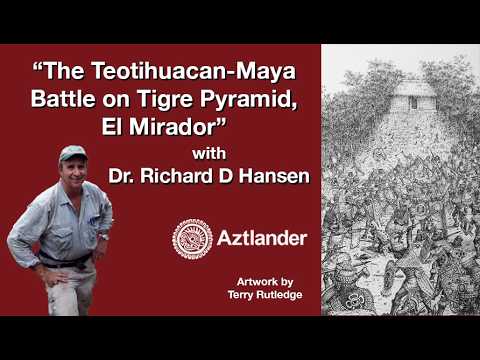
Aztlander lecture: "The Teotihuacan-Maya Battle on El Tigre at El Mirador" with Dr. Richard Hansen
youtu.be/Fg5iDAMGe38

#Mesoamerica

0 0 0 0
Xochipilli, the “Flower Prince,” was the god of flowers and patron of music, song, dance, and gambling. Under his other name, Macuilxochitl, he was also the patron deity of the ballgame, in which betting was a common practice. The god figure is seated with his legs drawn towards him and his arms resting across his knees. He wears a loincloth and sandals, and his head is adorned with the feather crest of the tropical quetzal bird, whose song is the first to be heard at dawn.

Xochipilli, the “Flower Prince,” was the god of flowers and patron of music, song, dance, and gambling. Under his other name, Macuilxochitl, he was also the patron deity of the ballgame, in which betting was a common practice. The god figure is seated with his legs drawn towards him and his arms resting across his knees. He wears a loincloth and sandals, and his head is adorned with the feather crest of the tropical quetzal bird, whose song is the first to be heard at dawn.

Xochipilli, the god of flowers, plants, and music
clay and pigments
1200-1400 CE
Aztec
Mexico

#handmade #ceramic #clay #pigments #religion #art #xochipilli #aztec #prince #god #flowers #plants #music #sport #mexico #mesoamerica #precolumbian #prehispanic #sculpture #ancientart #ancientmexico

322 50 11 2
Preview
🏹 Green Arrow of the Chichimec - Click to view on Ko-fi Follow Federica C. on Ko-fi

#JusticeLeague of #Mesoamerica continues with Chichimec Green Arrow! 🏹Full piece is on my Kofi for now before public release.
#dccomics #mesoart #aztecbatman ko-fi.com/i/IP5P01WOAZO

2 0 0 0
Post image

Seated figure
carved greenstone
900-600 BCE
Olmec culture
Mexico

#handmade #carved #green #stone #seatedfigure #olmec #olmecculture #mesoamerica #ancientmexico #prehispanic #precolumbian #ancientculture #sculpture #art #ancientart #precolumbianjade #nephrite #stone #carvedstone

166 22 3 0
The Mesoamerican ballgame is among the most important and enduring cultural features of the Pre-Columbian world, and its accompanying accoutrements of yokes, hachas, and palmas comprise one of the most important categories of stone sculpture.
The objects known as hachas, the Spanish word for “axes”, were originally named for their tapering form’s supposed resemblance to large stone axe heads. Like yokes and palmas, these enigmatic stone artifacts probably represent ritual effigies of actual ballgame equipment that was probably made of lighter and more perishable materials. These ceremonial objects in stone were evidently of high value, but many questions remain around the context in which they were originally used. 
The bold and assured carving of the present hacha illustrates several features that are particularly distinctive to hachas depicting bats. These include the large, pricked, ears, the depiction of the tragus, the fleshy form at the lower part of the ear, and the perforation in the upper half, which Shook and Marquis note “seldom occurs on specimens in other categories” (Edwin M. Shook and Elayne Marquis, op. cit., p. 77). Interestingly, this perforation is present on almost every hacha from the great Mayan city state of Palenque (ibid.).

Although illustrating features distinctive to a bat, something in the powerful physiognomy of this hacha seems to suggest a snarling jaguar. This hacha differs from most depictions of jaguars in hachas – although the fleshy snout suggests the big cat more than the bat – but Shook and Marquis note the resemblance, and state that “perhaps bat/jaguar/serpent would more accurately describe this representation.” (ibid., p. 80). The serpent, which here arches up from the bat’s snout, its slithering head atop the bat’s ear, was a creature with “important mythological connotations, and often associated with water and rain.” (ibid., p. 171). Hachas with secondary representations are rare.

The Mesoamerican ballgame is among the most important and enduring cultural features of the Pre-Columbian world, and its accompanying accoutrements of yokes, hachas, and palmas comprise one of the most important categories of stone sculpture. The objects known as hachas, the Spanish word for “axes”, were originally named for their tapering form’s supposed resemblance to large stone axe heads. Like yokes and palmas, these enigmatic stone artifacts probably represent ritual effigies of actual ballgame equipment that was probably made of lighter and more perishable materials. These ceremonial objects in stone were evidently of high value, but many questions remain around the context in which they were originally used. The bold and assured carving of the present hacha illustrates several features that are particularly distinctive to hachas depicting bats. These include the large, pricked, ears, the depiction of the tragus, the fleshy form at the lower part of the ear, and the perforation in the upper half, which Shook and Marquis note “seldom occurs on specimens in other categories” (Edwin M. Shook and Elayne Marquis, op. cit., p. 77). Interestingly, this perforation is present on almost every hacha from the great Mayan city state of Palenque (ibid.). Although illustrating features distinctive to a bat, something in the powerful physiognomy of this hacha seems to suggest a snarling jaguar. This hacha differs from most depictions of jaguars in hachas – although the fleshy snout suggests the big cat more than the bat – but Shook and Marquis note the resemblance, and state that “perhaps bat/jaguar/serpent would more accurately describe this representation.” (ibid., p. 80). The serpent, which here arches up from the bat’s snout, its slithering head atop the bat’s ear, was a creature with “important mythological connotations, and often associated with water and rain.” (ibid., p. 171). Hachas with secondary representations are rare.

Snake-Bat-Cat Hacha
carved stone
circa 550-950 CE
Maya culture
Mexico

#hacha #maya #snake #bat #cat #zoomorphic #carved #stone #Maya #mayanculture #mesoamerica #palenque #mexico #ancientart #precolumbian #prehispanic #mesoamericanballgame #ceremonial #ritual #sculpture #art #mayanart #ancientmexico

19 1 0 0
Post image

Progress is slower than I anticipated, but thats partly because the chapter is action-heavy. You can support me on Patreon to make it possible! #webcomic #cuauhtli #fantasy #Aztec #Mesoamerica

3 0 0 0

#Snakeman #NRGComics #venusthetrapper #venus #trapper #maneater #indiecomics #comicbooks #superheroes #villains #hunter #poacher #animals #fauna #amazonjungle #jungle #originalcharacters #characterdesign #poisonivy #audrey #mesoamerica #latinamerica #venusflytrap #flytrap #vore #aztecmythology

3 1 0 0

#olmec #jade #mask #precolumbian #mesoamerica #prehispanic #mexico #olmecart #carving #ancientart

5 0 0 0
painting of xochiquetzal

painting of xochiquetzal

Xochiquetzal

#art #artist #illust #illustration #aztec #mesoamerica #mexico #mythology

12 4 0 0

#snakeman #NRGComics #bandit #mongoose #hunter #aztecmythology #jungles #originalcharacters #characterdesign #indiecomics #comicbooks #superheroes #villains #amazon #mesoamerica #latinamerica #amazon #kraven #vanpelt #quetzalcoatl #tombraider #treasure #unknowncircle

4 0 0 0
University of Utah Press | The Urban Questions

Learn more: uofupress.com/books/the-ur...
#NewRelease #UrbanStudies #Archaeology #Mesoamerica #AcademicBooks

3 0 0 0
Preview
The Contradictions at the Heart of the American Revolution – Comparative Civilizational Analysis The analysis explores four distinct Indigenous civilizations at the time of European contact: Mexica, Maya, Inca, and Purépecha. Each had unique cosmologies, political structures, economies, and military doctrines. Understanding their contrasts highlights the rich diversity of the Americas, the specific losses from colonization, and the often-overlooked significance of the Purépecha.

#comparativeanalysis #civilization #mesoamerica

0 0 0 0
Preview
First Post: Saturday, March 21, 2026 Maya >>>>>>>>>>>>> MAGA Spring equinox time today, and this is what they were up to in Mesoamerica way before the Terrible Orange Blob was made incarnate as t…

cynthiapublishing.com/hp_wordpress...

#spring #springequinox #equinox #maya #mayans #chichenitza #mexico #mesoamerica #serpent #horses #horseracing #handicapping #longshots #thoroughbreds #charlestownraces #turfparadise

0 0 0 0
Post image Post image

#Teotichuacan is simply a *massive* site!
The main ceremonial route Avenue of the Dead is at least 2km (some say up to 5km) long; most folks only see a fraction of the whole ste. We spent 8 hours and still missed some spots.
#ANinMexico #archaeologicaltravel #history #mesoamerica

27 7 1 0
Post image

Another for #blueskyartshow #stone. One of the great stone atlantean columns on Pyramid B in the Toltecs' capital of Tula, Mexico (1997). #toltec #mesoamerica #mexico #indigenous #art #archaeology #PhotographersOfBlueSky #photography #ruins #AncientBlueSky #EastCoastKin

14 0 0 0
Mace head depicting a jaguar, its open mouth revealing powerful fangs. The ears are raised and alert, while the eyes, set within circular cavities, intensify a fierce expression that gives the figure an immediate sense of tension, as if ready to leap upon its prey. The volumes are compact and powerful, reflecting a deliberately massive and
expressive conception.
The Chorotega were a powerful, culturally advanced indigenous group that migrated from Mexico to Pacific Nicaragua and Costa Rica's Nicoya Peninsula, forming the southernmost Mesoamerican culture. Famous for intricate, hand-polished ceramics and strong agriculture, they were fierce warriors with a complex society, featuring elected leaders and a strict religious caste.

Mace head depicting a jaguar, its open mouth revealing powerful fangs. The ears are raised and alert, while the eyes, set within circular cavities, intensify a fierce expression that gives the figure an immediate sense of tension, as if ready to leap upon its prey. The volumes are compact and powerful, reflecting a deliberately massive and expressive conception. The Chorotega were a powerful, culturally advanced indigenous group that migrated from Mexico to Pacific Nicaragua and Costa Rica's Nicoya Peninsula, forming the southernmost Mesoamerican culture. Famous for intricate, hand-polished ceramics and strong agriculture, they were fierce warriors with a complex society, featuring elected leaders and a strict religious caste.

Jaguar mace head
nephrite jade
500 BCE - 500 CE
Chorotega culture
Costa Rica

#handmade #ancientart #culture #chorotega #costarica #mesoamerica #precolumbian #prehispanic #carved #nephrite #jade #jaguar #macehead #weapon #ceremonial #ritual #religion #art #craft #oneofakind

127 18 2 0
Post image

Álbum Miss y Mister Mesoamerica International 2026
MisteryMiss De Vzla Onceuponatime
🤴👸👑👠👠🏆🥇🌎🇻🇪
En el Salvador, Mesoamerica International 2026, Del 8 al 15 de Marzo de 2026, Edwin Quintero, Mister Handsome Monagas 2022, Mister Handsome Internacional 2022, Mr Mesoamérica Venezuela 2026 #Mesoamerica ..

0 0 1 0
Ceremonial cylindrical vessel with two handles, resting on an openwork annular foot. The body of the vase is sculpted in the round with two frontal deities displaying feline features, identifiable by their open jaws and prominent fangs. These figures are integrated into an architectonic composition that includes arcades evoking temple façades or stepped structures, as well as lateral ideograms, among which appears a serpentiform motif possibly associated with the Feathered Serpent deity, Kukulcan.
The decoration is framed at the top and bottom by two continuous friezes of serpent scales, sculpted
Stone ceremonial vessels from the Ulúa Valley rank among the most prestigious productions of the southern Maya area. Likely used in major elite rituals, they combine divine iconography, architectural symbolism, and mythic animal imagery in compositions of remarkable complexity. The presence of the Feathered Serpent Kukulcan—a major deity
associated with fertility, power, and the circulation of cosmic forces— emphasizes the sacred character of the piece. Examples of such vessels have been documented as far as Guatemala, Mexico, and Costa Rica, attesting to the cultural influence and wide-reaching connections of the Ulúa Valley ceremonial centers during the Late Classic and Early Postclassic periods.

Ceremonial cylindrical vessel with two handles, resting on an openwork annular foot. The body of the vase is sculpted in the round with two frontal deities displaying feline features, identifiable by their open jaws and prominent fangs. These figures are integrated into an architectonic composition that includes arcades evoking temple façades or stepped structures, as well as lateral ideograms, among which appears a serpentiform motif possibly associated with the Feathered Serpent deity, Kukulcan. The decoration is framed at the top and bottom by two continuous friezes of serpent scales, sculpted Stone ceremonial vessels from the Ulúa Valley rank among the most prestigious productions of the southern Maya area. Likely used in major elite rituals, they combine divine iconography, architectural symbolism, and mythic animal imagery in compositions of remarkable complexity. The presence of the Feathered Serpent Kukulcan—a major deity associated with fertility, power, and the circulation of cosmic forces— emphasizes the sacred character of the piece. Examples of such vessels have been documented as far as Guatemala, Mexico, and Costa Rica, attesting to the cultural influence and wide-reaching connections of the Ulúa Valley ceremonial centers during the Late Classic and Early Postclassic periods.

Ceremonial vessel
carved travertine
c. 500-1000 CE
Maya culture
Ulúa Valley, Honduras

#Maya #mayanart #precolumbian #prehispanic #mesoamerica #UlúaValley #honduras #ceremonialvessel #carved #travertine #religion #ritual #shaman #magic #kukulcan #featheredserpent #lateclassic #earlypostclassic

24 7 0 1
Post image Post image

#Today #CSW70 #MigrantWomen
📣 Join our conversation on access to justice for migrant women in #Mesoamerica and let’s work together to build strategies for action.
📅 March 16, 2026
🕡 6:30 PM (New York time)
📍 UN Church Center (Drew Room), New York
💜 Organized by #RMMSyM

0 1 0 0
Teotihuacan culture cult mask depicting the idealized face of a high-ranking individual, probably a lord or dignitary invested with a ritual function. The modeling is marked by great sobriety, entirely based on the balance of volumes and the accuracy of proportions. The deeply carved almond-shaped eyes, with elongated eyelids, give the gaze an introspective, calm, and vigilant expression.
Circa 450-650 CE.

Teotihuacan culture cult mask depicting the idealized face of a high-ranking individual, probably a lord or dignitary invested with a ritual function. The modeling is marked by great sobriety, entirely based on the balance of volumes and the accuracy of proportions. The deeply carved almond-shaped eyes, with elongated eyelids, give the gaze an introspective, calm, and vigilant expression. Circa 450-650 CE.

Cult Mask
carved limestone
c. 450-650 CE
Classic period
Teotihuacan, Valley of Mexico

#cult #mask #carved #stone #mesoamerica #mexico #handmade #teotihuacan #classicperiod #valleyofmexico #precolumbian #prehispanic #culture #religion #ritual

23 4 0 0
A simple chart showing progress of the process of production of my comic.

A simple chart showing progress of the process of production of my comic.

I decided to post regullar updates of production process for chapers of my comic. Also remember: you can support me on Patreon to make it possible! #webcomic #cuauhtli #fantasy #Aztec #Mesoamerica

3 0 1 0
Preview
Pipiltin and Macehualtin in Aztec Social Hierarchy Explore the divide between pipiltin nobles and macehualtin commoners and how social hierarchy shaped governance and power in Aztec society.

🏺 Aztec society was tightly structured. The noble pipiltin governed and led religious life, while the macehualtin sustained the empire through labor, farming, and military service.

A fascinating look at hierarchy, power, and social order in the Aztec world.

#AztecHistory #Mesoamerica #Brewminate

6 2 0 0
Anthropomorphic pendant depicting the head of a Maya lord shown in profile. The finely carved face is distinguished by a hieratic expression characteristic of elite
representations, with full lips, a strongly defined nose, and almond-shaped eyes. The figure wears an elaborate headdress dominated by a stylized animal figure with an elongated snout and a prominent fang. The ear, integrated into the profile, is adorned with a circular ornament.
The overall composition, with its deliberately composite and serpentiform forms, does not allow for a precise iconographic identification.

Anthropomorphic pendant depicting the head of a Maya lord shown in profile. The finely carved face is distinguished by a hieratic expression characteristic of elite representations, with full lips, a strongly defined nose, and almond-shaped eyes. The figure wears an elaborate headdress dominated by a stylized animal figure with an elongated snout and a prominent fang. The ear, integrated into the profile, is adorned with a circular ornament. The overall composition, with its deliberately composite and serpentiform forms, does not allow for a precise iconographic identification.

Anthropomorphic pendant
jadeite
600-900 CE
Maya
Late Classic period
Mexico

#handmade #carved #jade #jadeite #pendant #mayaculture #lateclassicperiod #anthropomorphic #design #mesoamerica #precolumbian #prehispanic #ancientmexico #mexico #ancientculture #precolumbianjade #oneofakind #jewelrydesign

34 6 0 0
Spiders in the Colima culture of ancient West Mexico (ca. 300 BC – 600 AD) were significant symbolic figures often depicted in terracotta zoomorphic vessels. These ceramic pieces, commonly found in shaft tombs, suggest that spiders held a complex, likely supernatural, role in their cosmology, connecting the earthly realm with the underworld.
Spiders are frequently represented in burial contexts, suggesting they functioned as protective entities or spiritual guardians for the deceased in the shaft tombs.
Similar to other Mesoamerican traditions, the spider was seen as a "weaver" of reality, representing the creative force and the ability to rebuild or transform, often linked to the cycles of life and death.
n broader pre-Hispanic contexts, including the nearby, roughly contemporary cultures in Peru (Cupisnique), spider imagery is closely associated with water, rain, and fertility, acting as a deity that brings necessary life forces. 
Facebook

Spiders in the Colima culture of ancient West Mexico (ca. 300 BC – 600 AD) were significant symbolic figures often depicted in terracotta zoomorphic vessels. These ceramic pieces, commonly found in shaft tombs, suggest that spiders held a complex, likely supernatural, role in their cosmology, connecting the earthly realm with the underworld. Spiders are frequently represented in burial contexts, suggesting they functioned as protective entities or spiritual guardians for the deceased in the shaft tombs. Similar to other Mesoamerican traditions, the spider was seen as a "weaver" of reality, representing the creative force and the ability to rebuild or transform, often linked to the cycles of life and death. n broader pre-Hispanic contexts, including the nearby, roughly contemporary cultures in Peru (Cupisnique), spider imagery is closely associated with water, rain, and fertility, acting as a deity that brings necessary life forces. Facebook

Spider form vessel
terracotta
300 BCE - 300 CE
Colima culture
Mexico

#spider #vessel #colimaculture #mesoamerica #ancientmexico #mexico #handmade #terracotta #weaver #spiritual #shafttombs #guardian #fertility #afterlife #water #rain #lifeanddeath

32 5 0 1
1. A raramuri flash mid run side profile showing his signature dots
2. A raramuri in white tope and red skirt kneeling down to inspect a foot print with a cheeky grin

1. A raramuri flash mid run side profile showing his signature dots 2. A raramuri in white tope and red skirt kneeling down to inspect a foot print with a cheeky grin

Full piece of “Muri” of the Raramuri, a #JusticeLeague of #Mesoamerica redesign of The Flash⚡️ .
⚡️One stormy night, the gods struck him with lightning that gave him his speed
⚡️As a civilian, Muri uses his tracking skills like a detective would
#feddraws #mesoart

4 3 1 0
00020-2826204743

00020-2826204743

00017-2826204740

00017-2826204740

00014-2826204737

00014-2826204737

00016-2826204739

00016-2826204739

🏃‍♀️ Cartoon Chel El Dorado

📦 Early access and exclusive versions are available now on PATREON / BOOSTY.

🏷️ #Chel #ElDorado #TheRoadToElDorado #Cartoon #DreamWorks #Adventure #GoldenCity #Mesoamerica #Smart #Classic

3 0 0 0
Post image

Chinampas

#art #artist #illust #illustration #aztec #mesoamerica #mexico #history

34 9 0 0
Post image

MisteryMiss De Vzla Onceuponatime
👸👑
Rumbo al Mesoamerica International 2026, Del 8 al 15 de Marzo de 2026, en el Salvador, Edwin Quintero, Mister Handsome Monagas 2022, Mister Handsome Internacional 2022, Mister Mesoamérica Venezuela 2026 #Mesoamerica 2026 #MesoamericaInternational 2026 #ElSalvador

0 0 0 0